Chateau Elan's Woodlands Course leaves college golfers uncomfortably numb
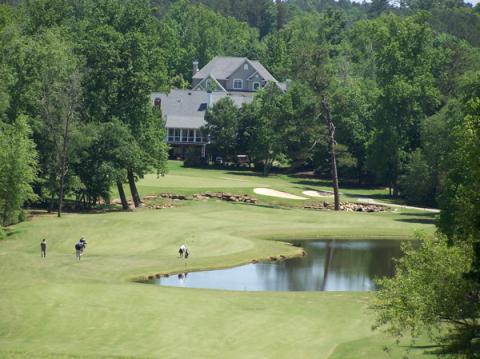
The par 5 15th at the Woodlands course requires three precise shots to get to the green, or two if you have the cojones to hit close to the pond and then over the creek at the front of the green. The hole measures 511 yards from the tips.
Size doesn't matter. The relatively short Woodlands Course at Chateau Elan Resort is a case in point. The back tees played to a modest 6,700 yards today during the first round of the NCAA Division III golf championships. The other half of the 35-team field played the resort's longer Chateau Course at over 7,000 yards.
The selection of courses was random, but there was nothing random about the order of finish after day one. The top six teams all played the Chateau Course. I walked the Woodlands, and it was firm and fast, both the fairways and greens, which would not have been such a problem if the fairways (and greens) didn't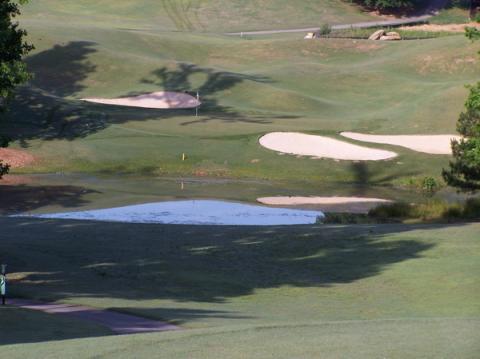 tilt, if the pins were not in the toughest-to-access parts of the greens and if out of bounds and hazards weren't cut so close to the fairways. Although the course was set up the same for half the field, only the strong survived. One team finished 77 strokes over par (that is for the best four scores of five players); props to Ogelthorpe University which finished 22 over, and 16 strokes higher than the La Verne University team, which played the Chateau and leads the tournament going into day two (one-third of the field will be cut after Wednesday's round before the final two rounds Thursday and Friday).
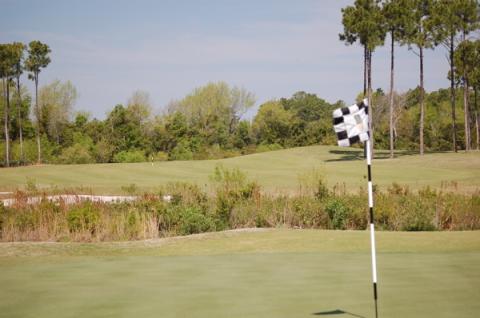
The Woodlands belies its rating of 73.1 and slope of 135 from the back tees. I had my little Kodak camera with me, and I hope the attached photos give some sense of the severity of the layout by architect Denis Griffiths. In coming days, I will have some comments about the Chateau Course as well as the real estate and lifestyle in the community of Chateau Elan, which is located just off Interstate 85, about 45 minutes northeast of Atlanta.
Chateau Elan Winery and Resort, 6060 Golf Club Drive, Braselton, GA. 678.425.6051. The Woodlands and Chateau Courses are both open to the public; the community's Legends course is strictly private. Green fees on the two public courses are a bargain at $70 weekdays, $50 between noon and 3 p.m. www.chateauelan.com
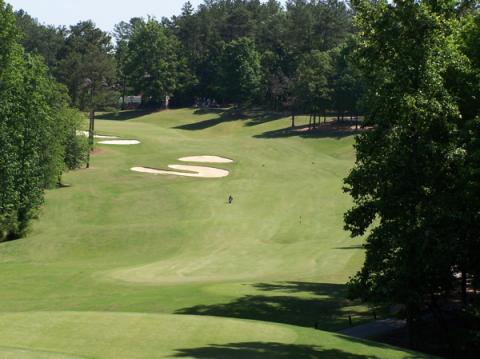
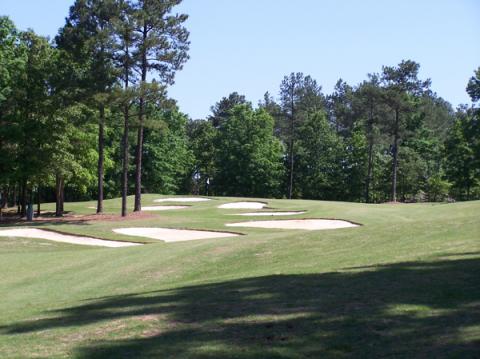
The tee shot on the uphill par 4 12th hole at the Woodlands (above) must be positioned to the right of the fairway bunkers in order to provide a reasonable approach over more bunkers to the firm and fast green (below).
 Home On The Course newsletter
Click here to sign up for our Free monthly newsletter, loaded with helpful information and observations about golf communities and their golf courses.
Housing inventories up in most cities in April
Although the populations of the cities drive the comparative raw numbers of houses on the market, the trend lines give an indication of the strength or weakness of the markets and, generally, of what has been happening with prices. Obviously, higher inventories create more competition to sell and, therefore, greater pressure on pricing. You are likely to find the greatest bargains where inventories are highest as a percentage of total local housing stock.
Of course, like most sweeping generalizations, this one has exceptions, so take the chart and most other out-of-context data with a lump of salt. You will find the interactive map by clicking here.
Kingsmill Resort golf a three-course buffet
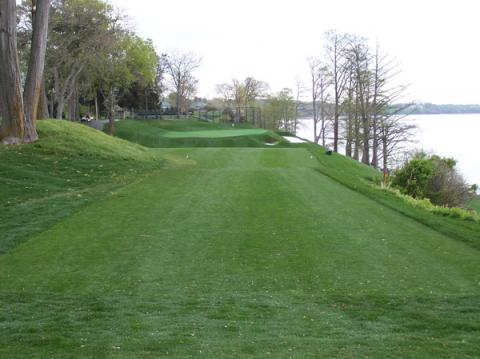
The James River finally comes into sight on the 17th at the River Course.
This is the second of two parts on the Kingsmill Resort, site of this weekend's LPGA tournament stop. Today's discussion of the golf courses at Kingsmill follows yesterday's observations on the real estate and amenities (see above). If you have any questions or would like to be introduced to a qualified agent at Kingsmill, please contact us (see button above).
Kingsmill's three 18-hole courses are of varying character and terrains, and they run the gamut from easy to mildly challenging. Anheuser-Busch, owner of the Williamsburg, VA, resort, is conscious of the need to keep members happy, and therefore it restricts one of the three courses to member play every day on a rotating basis. If you plan a weekend visit, you might want to check the schedule so you don't miss out on the River Course.
Kingsmill's River Course is 30 years old and is the best known of the three - the other two are the Plantation and the Woods. Pete Dye reworked his own River Course design four years ago at a cost of about $5 million, all paid for by the resort with no assessment to members. The men's tees play to a mild 6,325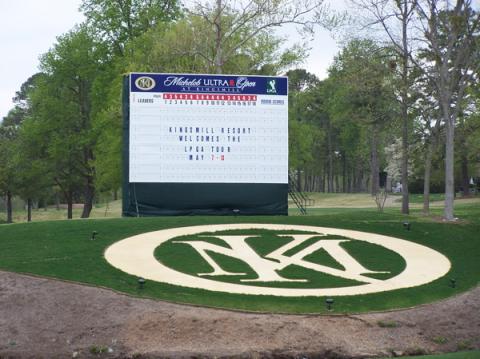 yards with a rating of 70.9 and slope of 133. (Note: I probably picked up an old yardage book which indicated a rating of 71.9 and slope of 138, quite a difference from what I saw.) Dye softened up the course to come more in line with its resort function as well as the switch from a PGA to an LPGA venue. In its previous design, the course had hosted a PGA tour event for 22 years. The ladies at the LPGA event this year are playing from 6,300 yards.
All in all, the River course is not tough but it is thoroughly enjoyable. It was in beautiful shape when I played it and presented food for thought on a number of tee boxes. A small bunker on the right side of the #1 fairway ran from 218 yards to 233 yards from the tee, forcing a drive down the left side. Dye tucks plenty of bunkers close to the greens, dearly penalizing any offline strikes. However, the greens are more than amply sized, 46 yards deep on a few of them, including the finisher which features nasty narrow traps along the entire left side and an even nastier one, because it is small and deep, at front right. From the men's tees, #18 is not long (362 yards) but the drive, over water and two traps 180 and 212 out on the left, must be perfect to have a straight-in approach to a narrow entryway to the green.
If there is a signature hole on the River course, it is #17, the only hole that plays along the James River. The green is enormous, a full 50 yards deep and guarded on the right side by a small bunker front right and a longer one beyond it that runs the rest of the length of the green. The only bailout area is short and left, but hit too long on that side and you will find yourself in gnarly grass with a downhill lie from a steep bank. On the card, the 17th is the easiest hole on the course, but choose the wrong club and bogey is likely.
I didn't get a chance to play the other two courses. The Plantation is an Arnold Palmer design that plays to 6,430 yards from the tips, with a rating of 71.6 and slope of 127. It is considered the least challenging or interesting of the three courses. The Woods course, a Tom Clark/Curtis Strange design, is the only layout at Kingsmill without homes in sight. It features a parkland style with some deep ravines and a quirk or two; for example, one double green features a sand bunker at its core. As for degree of difficulty, The Woods' ratings and slopes at the tips and men's tees fit between the Plantation and River Courses.
There is one more course at Kingsmill, a nine-holer that Golf Digest once called, "The most opulent pitch and putt in the country..." The Bray Links is a short course wedged between the resort's conference center and the James River. It has the best views of the river of any of the courses and is typically in excellent condition, with bent grass greens and Bermuda rough that is tended regularly by the same keepers of the other courses. It is a great place for residents and guests alike to hone their short games.
Membership fees are quite reasonable and varied for the amount of activities available. At the top of the list is the Platinum membership, which provides unlimited golf and access to all other facilities without charge (except for the spa). The initiation "deposit" is $30,000 if you choose to receive a 75% refund when you resign your membership, or a non-refundable $12,500. Members are entitled to reserve starting times up to seven days in advance, a necessity at the most popular times of the year. Dues are $4,530 annually for a full-family membership. Five other membership plans provide a range of lesser options for lower prices.
At Kingsmill's River Course, you can play where the pros play without feeling beat up. It is a fine golf course.
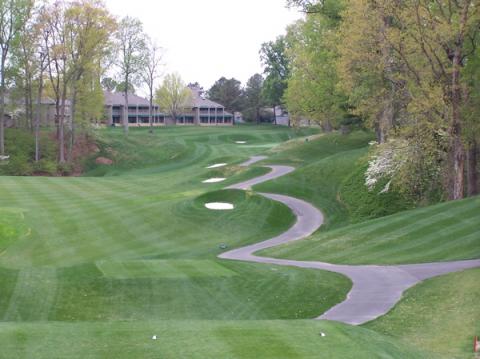
Unlike, say, Tom Fazio, Pete Dye makes no attempt to "bury" the cart paths in his design at the Rvier Course. Instead, he used the paths as an additional geometric element. As long as your tee shot does not land on them, they seem fine.
Busch, not bush league: Kingsmill Resort offers permanent vacation lifestyle
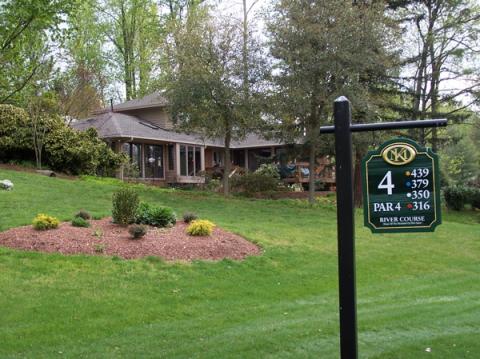
The attractive homes along Kingsmill's River Course do not encroach on the fairways.
This weekend, the Ladies Professional Golf Association makes its tour stop at the Kingsmill Resort in Williamsburg, VA. If you watch any of the coverage on television, you might catch a glimpse of some of the attractive homes adjacent to the course. I visited the resort in 2007, played the River Course, the best of the three on site, and held discussions with real estate agents and residents about the lifestyle at Kingsmill. My observations about the community follow; tomorrow I will review the River Course, site of this weekend's LPGA event.
The young at heart certainly could stay that way at the Kingsmill Resort. Adjacent to Busch Gardens and an Anheuser-Busch brewery - they run tours with free beer afterwards - and encompassing three golf courses that range from leisurely to professional-tour worthy, the Kingsmill Resort pretty much offers its residents a permanent vacation.
The entire Kingsmill property spans 4,500 acres, of which 3,000 are given over to residences and the rest to commercial interests, including the brewery, which is well hidden from the neighborhoods. All but 100 acres of the residential area is for the non-resort neighborhoods; the 100-acre area comprises 400 condo 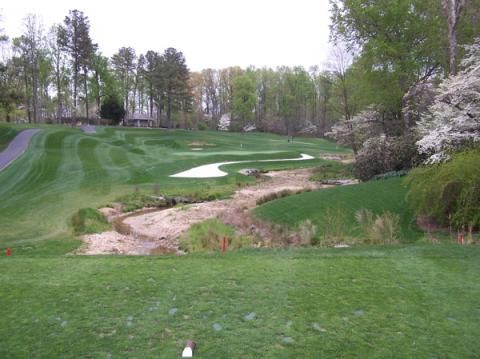 units, a conference center, golf and tennis clubhouses, and a marina. The condo units, priced anywhere from the $200s to $700s depending on views, are generally owned by investors and rented to Kingsmill's resort guests. Those guests have access to most of the community's amenities, and Kingsmill takes a 55 percent management fee for housekeeping and maintenance.
Despite the resort traffic, the community does what it can to neutralize any feelings of transience. Community regulations, for example, require that leases of single-family homes be for a minimum of one year. On average, no more than 5 percent of homes in the residential neighborhoods are leased at any one time. And Kingsmill's site plan ensures that neighborhoods remain "enclaves," with each ending in a cul de sac and well away from any main roads. A traffic circle at the community's heart is effective at dispersing traffic in four directions.
The assortment of real estate options is so diverse in Kingsmill that up to 45 percent of those who purchase a home on the property are already Kingsmill residents. They move between single-family homes, patio homes and town houses depending on their circumstances. Shortly before my visit, according to an on-site agent, one couple moved from their 4,000 square foot home to a 1,700 square foot patio home in the same neighborhood. In other cases, residents go upscale as their needs, and incomes, change.
Of Kingsmill's 1,500 single-family homes, 10 percent are of the small, "patio" variety, and another 900 are town home units. The "sweet spot" in the community are the three- and four-bedroom single-family houses that include a bonus room and are sized from 2,500 to 3,500 square feet. Most of these are in the $350,000
At the time of my visit, the community was planning to open a 50-acre tract to accommodate 45 new single-family homes. An additional eight one-acre lots were available on the river for up to $1.5 million and were recently joined in the view by a group of luxury town homes priced between $1.3 million and $2 million per unit.
Kingsmill shines in the number and quality of the amenities it offers its residents, as well as its resort guests. The list is long, and includes not only 63 holes of excellent golf, but also 15 tennis courts; a modern fitness facility with indoor and outdoor swimming pools; racquetball courts; aerobic studio; and a full-service spa and salon. Five dining facilities are also available, including one for special "elegant" dining.
Of Kingsmill's 4,200 residents, about two-thirds either work at a local business or as consultants from their homes. The rest are retired. Those restless few who can't find enough to occupy them on site can be at a big shopping mall in Newport News in 15 minutes, Virginia Beach in 90 minutes and the Blue Ridge Mountains in two hours. Grocery stores are within five minutes and a hospital within 15. Oh, yes, and a brewery is within two minutes.
Make no mistake about it, "resort" is in Kingsmill's name and nature. But Anheuser-Busch has done a good job of segregating the residents from the tourists, and where they must overlap, mostly on the golf courses, the twain meet harmoniously. Kingsmill's most obvious appeal is in the range of activities it offers its residents, but don't underestimate the variety of the real estate. In short, you can act like a neighbor or a guest as you see fit.
COMING TOMORROW: SOME THOUGHTS ON GOLF AT KINGSMILL.
One reliable sign the housing crisis may be over
I decided some months ago that I would never again waste any thought or electronic ink on David Lareah, the former chief economist for the National Association of Realtors. Mr. Lareah retired to Florida more than a year ago,
But we know David Lareah, and Mr. Yun is no David Lareah.
Yet now, just as I and countless others were getting used to not having Lareah to kick around anymore, comes word that the economist is back with a vengeance. According to Newsweek columnist Daniel McGinn, perhaps the only person on the planet brazen enough to admit he feels sorry for the savaging that Lareah received during his tenure as hypemeister, the disgraced economist is planning a new gig on Wall Street. McGinn writes that Lareah has formed Reecon Advisors, which will provide guidance to investors and Wall Street companies about the real estate market. Huh? That is like sending Bill Clinton to the local university to advise students on internships. Nothing good can come of it.
As a way to buff his own credibility with those Wall Street firms dopey enough to hire him, Lareah now says publicly that the housing market is going to stay in the dumper for some time.
"We're not at the bottom," Lareah told columnist McGinn. "[People] want it to be near the bottom, but we're not there yet. The leading indicators are still very bad. Pending home sales are still in bad shape. Mortgage applications are low ... There's still supply out there in abundance ...
"This thing is going to get worse before it gets better."
Lareah's pessimism about the housing market is the most optimistic note you will read anywhere.
Funny name, serious golf course near Naples
"Old Corkscrew Golf Club was designed by Jack Nicklaus and his son, Steve. The job was originally offered to another high-end designer who turned it down due to the location. Nicklaus saw the land and knew what he could do with it. WOW! A beautifully designed track and one of the nicest and certainly most interesting and challenging I have ever played in Florida. It runs 7,393 yards from the tips with a 76.9/148 slope rating; and 6,617 yards from the blue tees with a rating of 73.4/140 slope.
"The course has everything -- wild terrain, multiple lakes separating holes, tall pines framing most holes, wild flowers, fescue and the most multi-tiered, undulating greens I have ever seen. So far, no housing development so there are no buildings in sight bordering the course, with the exception of one hole where you see a large equipment shed. At $80 for the round with cart and access to the practice facilities, it was a bargain; compared to Tiburon at the Ritz Carlton in Naples, this was half the price and twice the course.
"If you are traveling to Naples, play this course which is located just south of Ft. Myers Airport, the airport used to fly into Naples, FL. The course is about eight miles inland from the highway in the middle of nowhere. What a find! You will not be disappointed. The staff is great and takes great pride in how you enjoyed yourself. Mark in the pro shop helps in any way.
"Wish I had my camera with me."
Elliot added that the cart girls are among the most attractive and friendliest anywhere. Also, for those contemplating a visit, house prices have plummeted in the Naples area and never were that high to the east of the city, in the neighborhoods near Old Corkscrew. As always, if you want to consider house options in the area, or just want more information, contact me and I will be happy to put you in touch with a knowledgeable local agent. There is no cost or obligation for the service.
For a few nice photos at the Nicklaus Design web site, click here.
Great Scot: Thistle Club channels the old sod
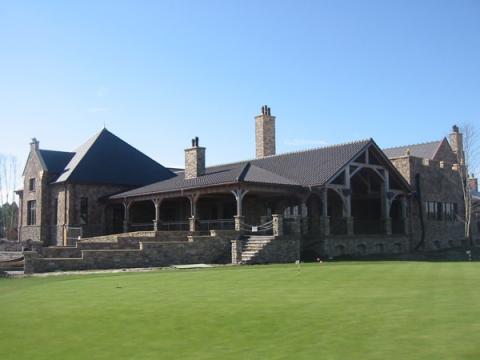
The soon-to-be-completed Scottish style clubhouse at The Thistle Golf Club caused one of our readers to be blown away during a visit. The clubhouse, which will include a display of golfing memorabilia, opens in June. (Photos courtesy of Thistle Club)
The Scottish thistle is a beautiful but painful flowering plant. Legend has it that a Viking marauder stepped on a thistle as he and his fellows were about to lay siege to a Scottish castle. His cry of pain at the prickly plant warned the castle's occupants. The element of surprise gone, the Scots repelled the assault.
A few centuries later, following the lead of Scottish football clubs and the original Thistle Club, a Scottish golfing society founded in 1815, a small
That could explain why the Calabash, NC, version of the Thistle Club has touted itself as "ferocious but fair." Designed by the hot Tim Cate, whose laudable if peculiar predisposition is to work on only one course at a time (Mr. Nicklaus take note), the 27-hole Thistle is thought by frequent players in these parts to be the best golf course between Myrtle Beach and Wilmington. At its longest routing of 7,000 yards, the three 18-hole combinations play to a maximum rating of 74.9 and slope of 137. The tees for the rest of us, at around 6,400, drop the average ratings to around 71.5 and slope to an average 132, a stern enough test for, say, a 12-handicap player. The Thistle features most of the characteristics of other coastal courses, but with conditioning (especially the large greens) that are consistently praised by those who know the course. Native coastal grasses, large sand bunkers and a number of lakes dominate the landscape. The fairways are more lush than links like and sweep up Cate's man-made berms toward hollows and bunkers.
Time is on your side at The Thistle
Perhaps the most impressive feature of The Thistle Golf Club has nothing to do with the physical and everything to do with the signals it sends to golfers and future homeowner/members. The Thistle is the 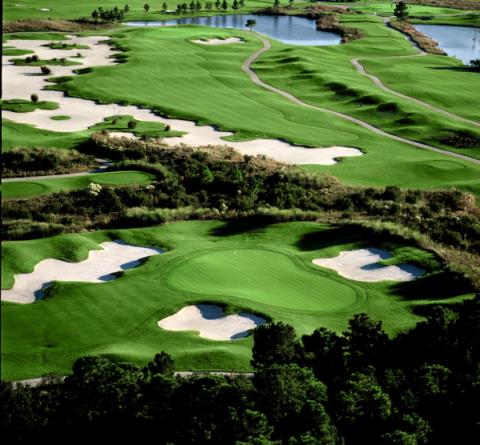 only course on the Grand Strand - indeed the only one I know of - that spaces its tee times 12 minutes apart, not the customary eight or the less frequent but judicious 10 minutes. According to the reports of Thistle golf veterans, the club scrupulously adheres to the 12 minute spacing and doesn't let anyone go to the first tee until the golfers in front have played their approach shots to green number one. Rounds almost always take less than 4 ½ hours, quite a feat for any course on the tourist-infested Strand. It shows that the owners of Thistle prize quality over lucre (compare the revenue lost when you send 20 people out to play per hour as opposed to 28 or more).
Thanks for the memorabilia
Not content with the reputation of the course solely, new owner Rusty Mackey commissioned construction of a dramatic new $10 million clubhouse that mimics the bold and majestic style of a Scottish castle. Mr. Mackey even imported wood-framed windows, wooden doors and a carved wooden bar from overseas to ensure an air of authenticity permeates the dramatic structure.
Club "captain" and PGA professional Gene Weldon took me on a tour of the clubhouse one recent Friday morning after I was shut out of golf on the course (my bad; I didn't reserve a tee time during the busiest week of the golf season). Mr. Weldon, the former longtime pro at a club in Myrtle Beach, proudly showed off the new building, which will open for business in June. Because The Thistle still accepts public play, and will for at least the next few years, the clubhouse will be divided into a member section and
Unobstructed views of golf course, not the neighbors
The club also promises its members the opportunity to travel the globe with ESPN golf analyst Charlie Rymer; Scotland, Ireland and Bandon Dunes are on the schedule. One final touch: When Mr. Mackey purchased the club, he also bought the previous owner's vast collection of golfing memorabilia. Woodworkers have been busy building the museum-quality display cases that will show off the artifacts.
The gated Thistle Estates, formerly called Thistle Downs (which made the place sound like a racetrack), follows the same formula as the golf course - quality first, with no apparent corners cut. Just 145 home sites are available in the first phase, and with only a handful of exceptions, no one house will have a view of another. Virtually all will be adjacent to the course, with views of fairways, greens and tees but not of any houses on the other sides of the holes. About half the properties had been sold at the time of my visit a few weeks ago, and those remaining to be sold were priced from $245,000 to $525,000. The inherent quality of the fledgling community has attracted people, like TV host Maury Povich, who can afford the highest home site prices in the Calabash/Sunset Beach area (except for those directly on the oceanfront).
Dropping prices $50,000
A few days after my visit, Thistle Estates dropped prices by up to $50,000 per lot. Count on about $150 to $175 per square foot to build the kind of home that will fit nicely onto a Thistle home site. For land and a 3,000 square foot house, about $700,000 to $800,000 is probably a good estimate to work with. Membership in the Thistle Golf Club requires a $45,000 deposit, fully refundable after three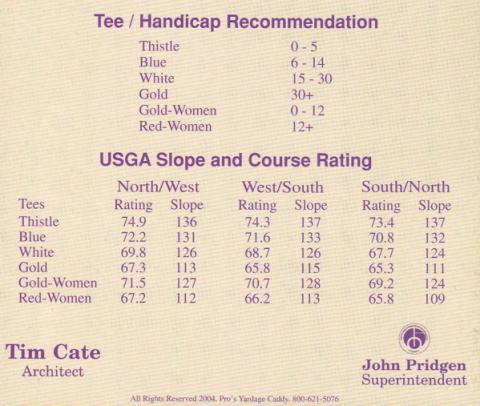 years and the termination of your membership. Until such time as the club actually does go fully private, members get priority tee times. Full family dues run just $325 per month, and $225 for an individual. To inspire real estate sales and memberships, The Thistle Golf Club is not charging dues until January 2010, a savings of up to $6,000, to anyone who buys in now.
Owner Mackey promises that once club memberships are fully subscribed - a total of 500 members - he will offer the "exclusive right of first refusal" to purchase the course, clubhouse and supporting facilities to the club members. That as much as a decade away, but some members must be already dreaming of the day.
A couple of weeks ago, I sent one of my readers for a short visit to Thistle Estates (as well as the nearby Ocean Ridge Plantation and to St. James Plantation, a half-hour north). He and his wife are looking for a lot they can build on in three or four years. Mr. Weldon took him around the Thistle clubhouse, and our gentle reader phoned me afterwards to say that he was "blown away." He won't be able to persuade his non-golfing wife to live in Thistle Estates, whose amenities other than golf can't match the larger plantations in the area, but if he winds up building a home nearby, he pretty well has his mind made up about where he will become a member.
The Thistle Club, 8840 Olde Downs Drive, Calabash, NC. 800.571.6710. www.thistlegolf.com. If you would like more information or an introduction to an agent at the Thistle Club, or to a qualified agent in the area, please do not hesitate to contact me (use the button at top of page). There is never a charge or obligation for this service.
The Thistle Golf Club Scorecards



Golfer retirees live large at sprawling St. James
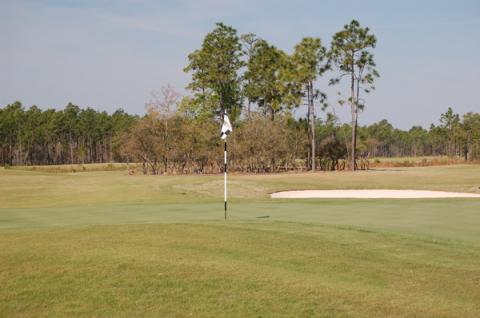
The split fairway par 5 7th hole at The Reserve at St. James Plantation forces you to make a decision on your lay-up second shot; right or left of the grove of trees about 100 yards from the green.
If you are a dedicated golfer happy to be retired and content to live among those who are equally happy about it, then you should feel right at home at St. James Plantation. The huge community, which is actually an incorporated town, features four nice, mostly private, courses and hundreds of 50- and 60-somethings. St. James isn't exactly an age-restricted community, but then again, you won't find too many young families there either.
The community is located toward the upper end of golf community alley, a string of plantations that stretches from the South Carolina/North Carolina border just above the Grand Strand of Myrtle Beach to Southport, a total of about 39 miles. People looking for a golf community along this stretch of U.S. Highway 17 have a wide variety to choose among, including Brunswick and Ocean Ridge Plantations at the southern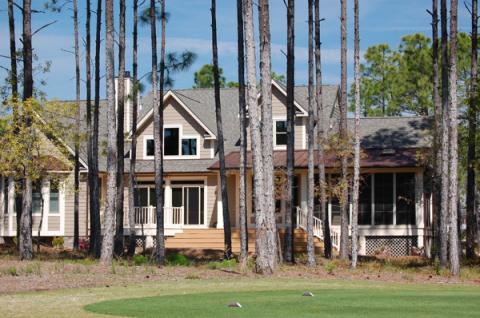 end, to Rivers Edge and Winding River more or less at the midpoint, to St. James and Bald Head Island bracketing the charming little port town of Southport at the north end. Home sites in these varied golf-oriented communities range from around $100,000 to as much as $400,000 for water and golf views combined. All these communities are at least five minutes drive to the beach, but most maintain beach clubs at oceanfront.
St. James, which is about 30 minutes south of Wilmington and just five minutes from Southport, is essentially divided up into large neighborhoods each with their own golf course, although residents have the option to belong to one or to all four of the clubs. The Members Club, Founders Club, Players Club and the 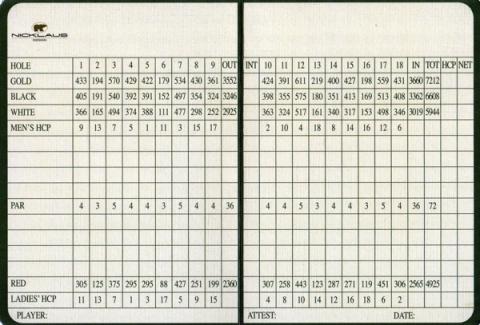 newest member of the quartet, The Reserve Club, all have their own clubhouses and, unlike most other multi-course communities, are totally separated (although all of them are inside the gates of St. James). I played The Reserve course with two St. James residents who are retired and loving it; they don't live in The Reserve but have opted for the Signature Membership Plan that provides them full access to all the clubs for a "membership deposit" of $30,000 and monthly dues of $440 per couple (their wives play golf as well). Membership in just one club is $250 per month for husband and wife, with a $20,000 deposit (but you need to sign up for the Signature Plan in order to have privileges at The Reserve). The courses are private but most members and local real estate agents indicate they all accept outside play.
I thought the Reserve course, which is the handiwork of the Nicklaus Design Group, was a tough test, especially on a windy day. It had the typical Carolina low country feel to it, which is to say a fair dose of marsh and the consequent tall grasses, sandy soil beneath the fairways, and firm greens well protected by bunkers. At 6,608 yards from the black (middle) tees, and with many forced carries over that marsh, the course played to a rating of 72.1 and lusty slope of 137 that seemed appropriate. Women golfers at St. James will find the rating of 66.7 and slope of just 105 a much milder experience at under 5,000 yards.
There is still a lot of raw dirt for sale at St. James, and especially in The Reserve neighborhood, with prices for golf views seeming to cluster around the $200,000 to $250,000 mark, less for plain old wooded views and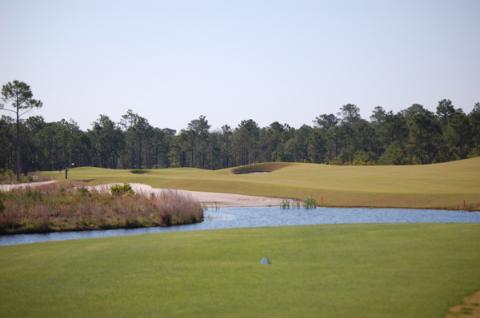 a little more if a smidgen of water is in view. Homes fall into the mid-six-figures range but the offerings are wide enough that just about anyone who wants to live in the 5,000 acre St. James can find something to suit them. Just be wary if you visit; St. James' on site agents have a vested interest in pushing their "developer" properties and may not be forthcoming - unless you ask - about resale properties. I have engaged a terrific outside agent who happens to be a resident of St. James and would be happy to make an introduction if you are interested. As ever, there is never a cost or obligation to you.
Night owls will have to content themselves with activities in one of the three clubhouses (the Reserve clubhouse is under construction) or with a drive to Wilmington. Southport is a charming town, but high-quality area restaurants are not plentiful, although I stopped for lunch on nearby Oak Island and had the largest platter of fried shrimp I had ever encountered (and for just $8.00). And it was tasty too. Of course, the hardcore golfer will find great variety either north or south, with dozens of courses available within 45 minutes.
Of modest concern to local residents was the announcement two years ago that the state of North Carolina plans to build a huge seaport just north of Southport. When completed around 2015, the port will be the second or third most heavily trafficked by ships on the east coast. New roads and related infrastructure will need to be built in the Southport area to accommodate the thousands of trucks carrying goods from the docks. On the other hand, the thousands of new jobs should not only help the general economy but also provide many part-time employment opportunities for St. James' retirees looking for some spare cash.
If you have set your retirement sights on golf five days a week and in the company of people of your own age, then St. James is worth a look.
St. James Plantation, 4006 St. James Drive, Southport, NC, 888.873.7598. www.StJamesPlantation.com.
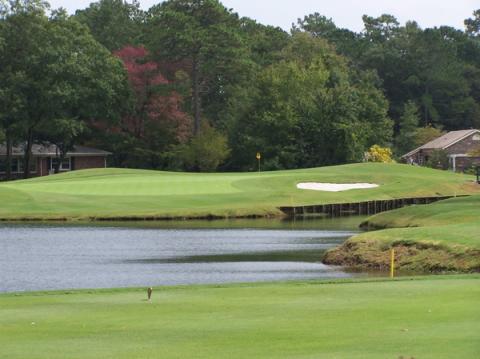
The dogleg left par 4 9th at The Reserve is short but tricky with an approach shot over no man's land to a green that slopes front to back.
Worker visa restrictions could hit course bottom lines, and yours
Today, most of the kids I know, including my own, would rather work at Starbucks or Barnes & Noble than deal with more than 90-degree days and the occasionally surly caddy master or green superintendent. Until this year, a
But now, the U.S. Congress has failed to extend the H2B visa program to permit more than a relative handful of foreign workers into the U.S. And, therefore, golf courses, as well as amusement parks, circuses and hotels, are looking at a long, hot summer without the seasonal minimum-wage workers they have come to rely upon.
The H2B visa program extension is at the whim of the Congress. Politicians who want to force substantial immigration reform are blocking the H2B visa extension as a way to apply pressure to force a vote on a more comprehensive bill. Last year's extension, which ran out in September, permitted 120,000 foreigners to work legally in the States during 2007. This summer, only 33,000 will be given the prized visas; another 33,000 were let into the country for the winter months.
The risk to small businesses is substantial, and golf courses are scrambling to find help. I heard the tail end of an interview with a golf industry official on CNN last week. He indicated some courses will be short 15 to 20 workers this summer because of the H2B visa restriction. After that interview, former Republican candidate for President and U.S. Representative Tom Tancredo, a staunch opponent of temporary visas for any foreign workers, made the point that a 5% unemployment rate in the U.S. demonstrates there are enough citizens available to work on the golf courses and in other jobs.
That may be true, but the unemployed aren't exactly lining up for the low-wage jobs in the Georgia summer heat. McDonald's, on the other hand, is air-conditioned and pays just as well as the golf courses do. If the courses are forced to raise the compensation for seasonal workers to attract local people, members of private clubs and daily fee players alike will start seeing increased assessments and green fees this season.
In denial: PGA tournament disavows Quail Hollow heritage
Designer George Cobb, whose portfolio of work includes the 6th hole at the Surf Club in Myrtle Beach, deserves proper credit for having put together the original routing at PGA Tour stop Quail Hollow in Chartlotte.
As I write this, I am watching Anthony Kim blow away the field at the Wachovia Championship at the Quail Hollow Golf Club in Charlotte, NC. I could not find a web site for the golf club, but The Wachovia Championship site does provide some course details. Suspiciously, though, the Wachovia site totally ignores the original designer of the course, George Cobb, who laid out Quail Hollow in the late 1950s (other sites acknowledge the Cobb connection). It was the original Cobb design that was used by the PGA Tour when its Charlotte stop at Quail Hollow was known as The Kemper Open.
The Wachovia Championship site indicates the course opened in 1961 (no designer named), that Arnold Palmer modified a few holes in 1985, Tom Fazio reconstructed the entire layout in 1997 and then modified a few more holes in 2003. With all this reworking, you cannot say that Quail Hollow meets the definition of a "classic" course.
Cobb isn't exactly a piker, having designed dozens of well-respected, if not legendary, tracks throughout the southeastern U.S., including the par 3 at Augusta National. His routings are more classic than those of his more modern contemporaries, not the stuff great photographs are made from but you won't hurt yourself mentally or physically on a Cobb course.
Okay, so he doesn't design championship courses, and names like Palmer and Fazio inspire thoughts of architectural flourishes more than does Cobb. But does it really hurt the pedigree of the course to deny its original designer his due? Word to Wachovia: Post a new history for Quail Hollow that gives credit to George Cobb.
Caledonia's not-too-evil twin brother
Surfing ahead of the baby boomer tsunami
Check in the mail: How to spend that $1,500

Now on Sale

- The only book about golf communities in the last 10 years.
- 156-page step-by-step guide to finding your dream golf home.
- Info on nearly 100 golf communities the author has visited.
- Paperback version costs less than a sleeve of Pro VIs.
Here is what the experts are saying:
“The book is chocked full of information…applicable to anyone looking for a move to the Southeast regardless of whether they are looking for a golf community or not.” — John LaFoy, golf architect (Linville Ridge CC, CC of Charleston, The Neuse GC)
“Larry has done a tremendous amount of work and anyone — like me — who is looking to search for a golf home now or in a few years needs this book.” — Brad Chambers, golf blogger, ShootingYourAge.com
“Wow! What a thorough piece of work…a must for anyone moving South. This book will help many people.” — Brett Miller, owner and founder of MMA, Inc, a golf industry consultancy
Buy It Now at Amazon.com or BarnesandNoble.com.