A new life worth the risk
As veteran readers of this site know, I am not a fan of those services that promote specific golf communities in the guise of what looks like "editorial" information. There are plenty of web sites dense with details about specific golf communities, but almost all their publishers are paid fees for promoting those communities. Thus, they never compare communities or indicate any negative points. How objective can they be about their advertisers?
Every once in a while, though, these promoters offer something that, while clearly in their self-interest, is nevertheless well articulated and thought provoking. An op ed in the latest (Fall 2009) issue of Ideal Living, published by the organization that conducts the Live South trade shows in Northeast and Midwest cities, is worth considering for anyone wishing to start the next phase in their lives but not quite sure if they should.
Under the title "The Value of Risk Taking," the piece on page 102 of the magazine compares the "risks" and fears many
The article concludes that retirement involves risks not unlike those faced when deciding to have a child, such as not having enough money and the feeling that you are not ready. But postponing what you want may "rob you of years of new adventure and the emotional re-nourishment that comes with it." The unnamed author of the article advises that each of us faced with such a decision should consider the risks, have a plan to deal with them and then move forward if the consequences are not "catastrophic" (my word, not the author's).
"Retirement is a time to awaken and live out your dreams," the piece concludes. "Risk is just part of the process."
I think readers of this site are awakening to the prospects of a reinvigorated life. In recent weeks, I have received a
Yes, there are always some risks involved with big decisions like relocation. Honest, timely information can reduce those risks. Ultimately, the risk of not following your dreams may have longer-lasting consequences. I look forward to helping you realize your dream of a home on the course.
Note: Ideal-Living is not posted online but the magazine is available, for free, via the magazine's web site . Make sure you specify that you want the Fall 2009 issue, as the sign-up form indicates Spring 2009. You will have to provide your name and address and other personal information, so expect follow-up communications such as invitations to Live South trade shows. This weekend's show is in Reston, VA, followed by shows in Morris County, NJ (9/18 - 20) and Long Island, NY (9/26 - 27).
 Home On The Course newsletter
Click here to sign up for our Free monthly newsletter, loaded with helpful information and observations about golf communities and their golf courses.
Home, home on The Ranch
I played a round of golf today at The Ranch in Southwick, MA, a golf course I try to return to at least once each season. Located just north of the Connecticut border and about 40 minutes from my home, the course spans former farmland within view of the foothills of the Berkshire Mountains. I previously posted a review of The Ranch in this space; please click here to read the golf course review by my son Tim.
The course was in splendid condition today, the greens medium fast, which took away some of the terror of being above the hole on the large, sloping surfaces. With the course's workers out on the front nine aerating a few of the fairways, it is possible they did not get around to cutting the greens this morning. Nevertheless, the greens were as tricky as ever, to read and to putt. My friend Tim, who plays out of a private club in Connecticut, was impressed by The Ranch and, of course, like most first timers, amazed at the prospect of possibly reaching a 600 yard hole in two
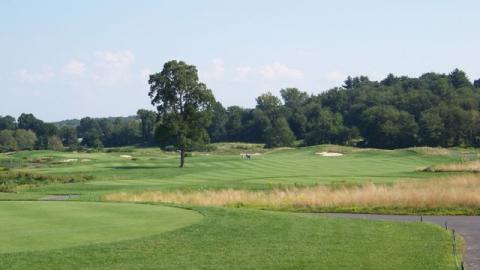 The Ranch gets off to a rousing start, with a par five that can be reached in two easily if you dare to hit beyond the tree on the left to a small portion of fairway. From there, the carry to the green is about 200 yards, giving you a putt for eagle if you make it, or a drop on the near side of the pond if you don't.
shots. That would be the 16th hole, known as Ski Hill, which travels down
through a succession of hills and plateaus to a flat patch of fairway about 150 yards from the hole. The hole reminds me somewhat of the finishing two holes at Kapalua Plantation in Hawaii, which are more than 100 yards longer than their pars would suggest because they are severely downhill. The 16th is worth the price of admission at The Ranch.
That price of admission is as much as $100, cart with excellent GPS included, which puts The Ranch squarely in the "high-end" daily fee course category. This is a tough economy for such golf clubs in the northeast, but head golf professional Hope Kelley told me that the number of rounds so far this golf season are up from last year, which says something about the course's reputation locally and within a 90-minute radius. The course also has more than 200 members but only 60 or so are frequent players, a few of them from the attractive surrounding community of homes. The homes range in price from around $500,000 to just over $1 million; the larger, and more expensive of them have sweeping views down some of the steeply graded fairways of the golf course. Except for a section of six homes, the community is gated, yet it really doesn't need to be. Southwick still retains the feel of rural America, although those who choose to live inside The Ranch community will find Springfield, MA, an easy commute and Hartford, CT, just 45 minutes away.
An
acquaintance of mine recently listed for sale his large, beautiful home at The
Ranch (click on the photo for a larger view). The back deck of the house looks across the green at #11 and
down the fairway to the pond beyond.
It features 5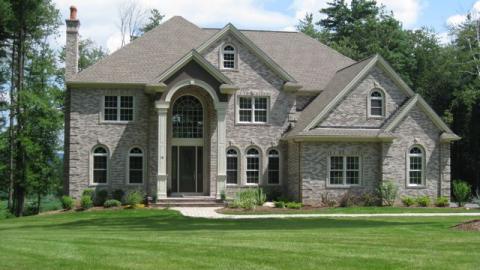 bedrooms and 5 ½ baths with some impressive and functional
touches, such as walk-in butler pantry in the custom kitchen, stone fireplace
on the lower level, and walkout from that level to the backyard, to sneak in a
few putts as the sun is going down.
The lavish master bedroom suite includes radiant heated tile floors in
the bath area.
bedrooms and 5 ½ baths with some impressive and functional
touches, such as walk-in butler pantry in the custom kitchen, stone fireplace
on the lower level, and walkout from that level to the backyard, to sneak in a
few putts as the sun is going down.
The lavish master bedroom suite includes radiant heated tile floors in
the bath area.
My friend has listed the home at $938,850. If you are interested, click here to send me a note, and I will be pleased to put you in touch with his real estate agent. By the way, a full membership at The Ranch is just over $3,000 annually. The golf season runs from April into early November, time enough to play way more than 30 rounds, the break-even point given the green fees. That is a good deal at a very good golf course.
Has the air gone out of Florida?
God's Waiting Room has turned into an emergency room.
Florida suffered its first net migration loss in 63 years in 2008. Any fool could see it coming, and this fool -- your editor -- has written about the blindingly obvious over the last few years. Folks can argue about the beginning
The aging of the population in Florida has just accelerated the migration. Yes, people are leaving God's Waiting Room for their heavenly reward, but many others who are still quite active have had enough of traffic and weather after a decade or more of retirement life in Florida. Regional and town officials did an awful job of getting ready for the tremendous influx of population from the 1950s on. Those who might defend them on the basis that no one could see the population wave coming should understand that these are essentially the same officials who turned their towns over to developers to plan all those large communities on both sides of the state's roadways. Couldn't see it coming? I don't think so. These horrendously laid-out roadways in the most popular parts of Florida have made prisoners of planned golf community residents. Even a simple 4 p.m. trip to the local smorgasbord is an exercise in patience and pollution. Many have run out of patience.
Florida's weather has not changed much over recent decades, but those who came to the Sunshine State to avoid snowfall and cold have become
There are dozens of other reasons people are leaving the state, and one web site I stumbled on has captured some of them in macabre and occasionally disdainful tones. "I blame the elderly for dying off in droves," wrote one. Another blames the "alarming rise in the Python population" in the Florida swaps. Some, of course, blame the sitting President and still others who blame his predecessor.
You won't find many people waving the flag for Florida at the moment, and some residents are fearful that the state's leaders may have no choice, in
But many savvy investors and bargain hunters make money in strong bear markets. Florida is the consummate contrarian play. If the doomsayers are wrong, some brassy folks are going to make a lot of money, and some who just want to find a home in a nice community will have many to choose from at ridiculously low prices. They will still have that great weather at least eight months a year, making the slog through traffic to get to the late afternoon buffet a little more tolerable.
In most groups overcome with hyperventilation, someone sees opportunity amid the problems. The lone Florida supporter at the web site I visited avoided pointing the finger and looked at the opportunity. "I blame no one (for the exodus)," he wrote, "and give thanks. I may move back one day."
He may have company if prices drop any more.
Note: The referenced web site is Fark.com, which will be a bit scatological for some tastes. I just stumbled upon it doing a search about Florida. I don't intend to be a regular visitor, but if you must, here is the link to the comments about Florida's loss of population.
Median cool: Check out home price trends in dozens of metro areas
I have criticized the National Association of Realtors here many times for its unremitting Pollyanna approach to markets. The organization's economists never met a housing situation, good or bad, that they didn't think was better than the data indicated. They pumped sunshine into the market even as most analysts saw that the sub-prime lending problems would bring everything to a halt -- and worse.
That aside, the NAR does have access to the most up to date housing market data through its thousands of Realtors across the country. You don't have to be a member, though, to take advantage of their number crunching. Courtesy of Don "Toby" Tobin, one of the best real estate bloggers (GoToby.com), click here for a link to an interactive map with some interesting median price data from around the nation.
While the data for the second quarter of 2009 doesn't say all that much, the housing trends in some markets provide guidance for those looking to sell their homes in one market and buy in another. If, for example, you live in a market where prices are still dropping and contemplating a move to a market where prices have been rising, the time to act could be now, assuming you are ready to move.
Note to readers: I am taking tomorrow off. Not only is it the middle of the Labor Day weekend, but my wife and I are celebrating our 28th wedding anniversary. A day away from the laptop is the least I can give her. (Okay, okay, I did buy her something as well.) Have a great holiday.
This little piggy went to market...a home
In a tough real estate market, creative agents appeal to both the heart and the head. But two agents in Pawleys Island, SC, are hoping the shortest distance to a quick sale is through the stomach.
Vintage Estates Realty's Johnny Besser and Ryan Morgan, who listed the home in Pawleys Plantation, are going to provide a mess of barbecue for all who visit 92 Turtle Creek Drive this Sunday. The food will be good ol' Carolina barbecue from Hog Heaven, the roadhouse just a few miles down Highway 17. Hog Heaven is a favored haunt for me and my two teenage kids, and if Besser and Morgan really want to seduce their customers, they will order up a few pieces of fried chicken as well to go with the pork. Hog Heaven's chicken is as good as it gets.
The pair have sent more than 350
emails and flyers to local residents in the hopes one might be looking to trade
up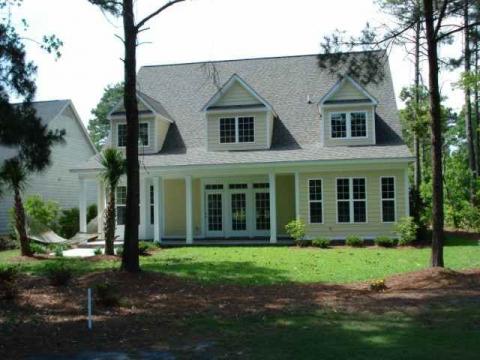 from a condo or may have friends or relatives considering a move to Pawleys
Plantation. Your editor maintains
a vacation home in Pawleys Plantation, and I know the home on Turtle Creek --
although I have seen more of its backside than its front. The house is nicely positioned just
beyond and to the right of the third green on one of Jack Nicklaus' challenging
par 3s. I have retrieved more than
a few Titleists from its backyard over the last 10 years. I know the neighborhood as well, and
the 2,600 square foot home seems quite reasonably priced at $419,000, down from
an original listing of $479,000.
Although the owner of the 4 bedroom, 2 ½ bath house has received a
number of offers, all were of the bottom-fishing variety, and he just isn't
that desperate to sell.
from a condo or may have friends or relatives considering a move to Pawleys
Plantation. Your editor maintains
a vacation home in Pawleys Plantation, and I know the home on Turtle Creek --
although I have seen more of its backside than its front. The house is nicely positioned just
beyond and to the right of the third green on one of Jack Nicklaus' challenging
par 3s. I have retrieved more than
a few Titleists from its backyard over the last 10 years. I know the neighborhood as well, and
the 2,600 square foot home seems quite reasonably priced at $419,000, down from
an original listing of $479,000.
Although the owner of the 4 bedroom, 2 ½ bath house has received a
number of offers, all were of the bottom-fishing variety, and he just isn't
that desperate to sell.
For sure, some folks will show up on Sunday just out of curiosity, and others to eat the barbecue, without any thought of buying the house. Besser and Morgan don't care, although they certainly hope to sell the house for the owner. Their agency is just 1 ½-years old, and they are hoping that the barbecue will give those who stop by some food for thought.
If you happen to be in the Myrtle Beach area on Sunday (Sept. 6), feel free to stop by the house from 2 to 5 p.m. Please tell Messrs. Besser and Morgan that you were sent by Golf Community Reviews. You can find the Google map location by clicking here.
 Last house on the left: You can enjoy some good BBQ on Sunday behind the 3rd green at Pawleys Plantation. Photo by Tim Gavrich.
It's not the equipment. Or is it?
"Hold up a 1-iron [during a lightning storm]. Even God can't hit a 1-iron." -- Lee Trevino
I have been losing distance on all my shots the last few years. The more I lose the harder I swing which, of course, results in even weaker shots. I have never thought I had enough club in my hands, even with a driver, but it has gotten to the point recently where I am swinging so hard that I am actually topping some shots, that is when I am not shaving them off to the right like a dying quail, or snap hooking them left.
I know my problem is between the ears, but every time I buy new golf clubs -- every six or seven years -- I play
We wandered through the used-club section, and there they were -- a set of Pine Eye 2 clubs, 3-iron through sand wedge, with a 1-iron thrown in, a bit long in the teeth (square grooves, that is) but certainly not the worse for wear. These were never the most attractive clubs on the market, but they had a well-earned reputation for being straight. My son encouraged me to hit them into the net, and they felt as good as anything I had hit earlier. But $225 for a set of old clubs with worn cord grips?
"Dad," my son responded, "some pros are still hitting these on tour, and you can probably get your money back on eBay." Oh, yeah, he added, "You might hit the 1-iron as far as your 3 wood." Thanks kid.
The extremely knowledgeable Golfer's Warehouse clubmaker assured me that the Pings were in fine shape, showed me how to clean and rough up the grips, and said, indeed, that the few yards I might lose in distance -- how could I lose any more than I had already? -- would be more than neutralized by "the straightest clubs ever made."
Well, I cleaned them up and, yesterday, tried them out at Tower Ridge Golf Club, a public course in Simsbury, CT, that isn't too long (6.500 yards from the tips) but features dramatic elevation changes. It was eerily similar to a course I played on Monday where I had my worst round in 20 years, an even 100. Yesterday, I improved by 20%, carding an 81 and losing to the prodigal son by just 5 strokes, the closest I have come to beating him in about five years. I hit the new old irons okay, but made a couple of surprisingly good swings with the 1-iron, sending it actually farther than a couple of earlier 3-wood shots. At the uphill, nearly 200 yard par 3 16th hole, I rifled the 1-iron dead straight to about 15 feet from the pin.
Excited about my new purchase, I called the 800-number at Ping, recited the serial number on the clubs, and asked about their provenance. They were born, the nice lady on the phone told me as she checked her computer, on August 16, 1994. Hmm, I thought: I had a pretty good game back then.
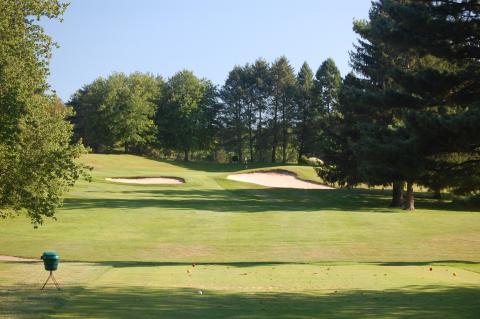
I nailed a 1-iron shot on the par 3 16th at Tower Ridge to pin high. It was only the second 1-iron shot I had hit in my life; the other was equally well struck earlier in the round.
Golf course review: Fox Hopyard, East Haddam, CT
You can approach Fox Hopyard Golf Club in a number of ways. We took the ferry, after the antique GPS system in my car dead-ended us at the Connecticut River. Lucky for us, the state of Connecticut runs a car-ferry service back and forth between Chester and Hadlyme. The trip is all of five minutes -- and just $3 each way -- and it is a nice way to relax before a challenging round at Fox Hopyard. Other drives to the course are more conventional, winding along roads lined with trees and rock outcroppings. The land immediately around the golf course, including the Devil's Hopyard State Park, seems inhospitable for golf links of any kind, but long ago some farmer, with golf probably the farthest thing from his mind, cleared the land for other purposes, most likely corn growing and a little dairy farming (some great cheeses come out of this part of the state).
Public club, private feel
Getting to Fox Hopyard is only half the fun. Although not cheap (we paid green fees of $89 each, cart included), public course golfers will feel treated like members for a day. Fox Hopyard management has a lot of practice providing a brand of personalized service; the club boasts 200 members, and I could detect not a scintilla of distinction in the way that staff treated members of the public and their club members. All facilities, including a large practice area and clubhouse with an active and excellent restaurant -- we had a nice lunch and met the new chef -- are open to all, and the food is good enough to attract non-golfers from the surrounding countryside.
Initiation fees for members are currently on "special" at $5,000 plus an $8,000 bond, returned in full when a member resigns. This compares quite favorably with fully private golf courses within a half-hour radius that charge many multiples of the $5,000. We were invited to tour one of the three homes built adjacent to the Fox Hopyard course (see below for more on the surrounding community) whose occupants maintain a winter home in Florida. Judging from the large size and beautiful layout of the quintessentially New England style home, the couple can afford the big ticket membership at one Fairfield County's private courses. But they have chosen to make their summer home at Fox Hopyard, which says something about the beauty of the landscape, the dedicated service of the staff and the challenge of the golf course.
I found the course,
which was designed by Roger Rulewich, difficult without being unfair. The first hole is an appropriate
warm-up, a slight dogleg right, downhill from the tee, the rough down the left
side being the only trouble if you hit the ball mildly offline (the tees are
tilted in that direction so the trees up on the right should not be a
factor). The green complex at #1
portends the rest on the course; that is, slightly elevated and with large, if
not too menacing, sand bunkers protecting misshapen greens, some dramatically
shaped. The 4th hole, a
par 3, features a green shaped, well, a bit like Mickey Mouse's head (no
disrespect intended). The middle
area juts down toward the marsh beneath the green, with two large ears
extending left and right from the middle of the green. This provides the superintendent with
various options for pin placements, none of them easy from tees 172 to 202
yards away and about two stories up.
Club selection here is difficult because of the elevation and the need
to get your ball to stay on the third of the green with the hole. Any putt from one area to another,
given the sloping, will leave a second putt way beyond tap-in range.
appropriate
warm-up, a slight dogleg right, downhill from the tee, the rough down the left
side being the only trouble if you hit the ball mildly offline (the tees are
tilted in that direction so the trees up on the right should not be a
factor). The green complex at #1
portends the rest on the course; that is, slightly elevated and with large, if
not too menacing, sand bunkers protecting misshapen greens, some dramatically
shaped. The 4th hole, a
par 3, features a green shaped, well, a bit like Mickey Mouse's head (no
disrespect intended). The middle
area juts down toward the marsh beneath the green, with two large ears
extending left and right from the middle of the green. This provides the superintendent with
various options for pin placements, none of them easy from tees 172 to 202
yards away and about two stories up.
Club selection here is difficult because of the elevation and the need
to get your ball to stay on the third of the green with the hole. Any putt from one area to another,
given the sloping, will leave a second putt way beyond tap-in range.
Ace in the hole
All the par 3s are a treat at Fox Hopyard, the 4th followed by the shorter but no less treacherous 8th, 180 yards from the back tees to clear water and a bunker to reach a two-leveled green that is much wider than it is deep. For those who want to play it "safe" with a shot to the back of the green, a large, amoebic-looking bunker awaits. I was ecstatic to wind up pin high right, just off the green, but no one was happier than one of my playing partners for the day, Sandy Marcks, who handles marketing for the club. From 100 yards out, she hit a perfect pitching wedge that found the first third of the green and trickled into the cup for her first ace. Trust me, the hole is not that easy.
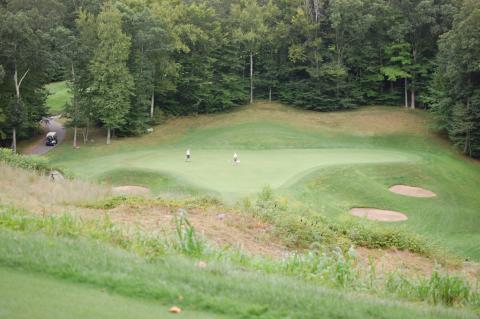
All ears: The 4th green may look like Mickey Mouse, but pin positions on the hole are no laughing matter.
Water is really not that much a factor at Fox Hopyard, its hazardous effects felt most on the par 4 7th and the finishing hole. The 395-yard 7th, a dogleg left, is the trickiest driving hole on the course, requiring enough club off the tee to clear a "vernal pool" a little less than 200 yards out, but not too much that you reach the hazard beyond, about 240 yards out. Assuming you make dry land off the tee, the 150-yard or so approach must negotiate deep bunkers left and right of the narrow entrance to the green, as well as the lake that juts in from the left. The 7th is the #1 handicap hole on the course, entirely justified in my opinion.
The two par 5s on the front are reachable for big hitters, but Rulewich's design exacts a severe penalty for those who take the risk to earn the reward. At 517 yards from the tips, bangers should have no problems clearing the deep marsh that extends to 200 yards out. If they position their tee shot down the left side, they will see the green clearly. Anything down the right will require a fade for the second shot and bring a stream into play if the fade turns into a slice or a scull. The 5th hole, even shorter at 506 yards from the tips and downhill, will tempt the prospect of an eagle putt, but the stream that crosses the fairway about 50 yards from the green could spell bogey or worse.
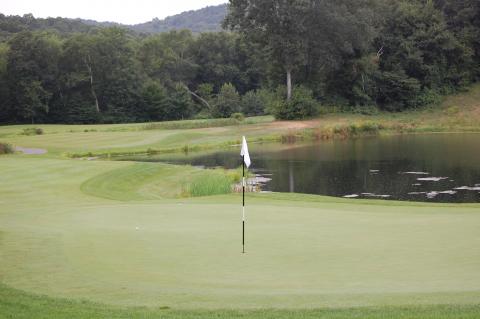
The par 3 8th hole is all carry. Our playing partner, Sandy Marcks, carried her 100 yard tee shot into the hole for her first ace (hers in the ball you can't see).
Fox Hopyard ends with a par 5 of 551 yards from the tips. The finisher is all about water after a drive to a wide-open fairway that is interrupted by large bunkers on both sides. A large pond covers the entire right side from 180 yards out to the edge of the green, and the two large bunkers guarding the other side from 90 yards in make even a "safe" approach shot look slightly more challenging than it is. Stay dry to about 120 yards from the green, and you will have one of the best opportunities at Fox Hopyard for a birdie putt and a nice finish to an entertaining round.
No foolin' with the Fox
Given the upscale green fees, conditions at Fox Hopyard should be excellent, and they do not disappoint. The turf is tight and well clipped on both fairways and greens, the only flaws being of the manmade variety (pitch marks on greens and fairway divots ignored by boorish players. The large granite tee markers with the foppishly adorned fox add a touch of both class and whimsy to the course.
Richard
Marcks, who manages all three Fox Group courses (the others are in
Massachusetts and Florida),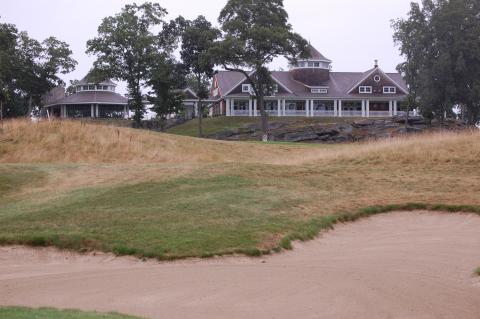 maintained a watchful eye over his domain as we
made our way around the course. A residential
architect and turf scientist who also trained in automotive engineering, Marcks runs a tight ship in all areas
of club management, both on the course and in the clubhouse, where he proudly
introduced me to his new chef.
During our round, a number of drove carts around the course, including
head pro Ron Beck, to ensure that players make their way through the 18
holes in less than 4 ½ hours (and, I am sure, to school them in fixing divots
if they fail to do so). As I
reported here a few days ago, Mr. Beck, who has been named by Golf Digest as one of the best golf instructors in Connecticut, has escorted ungentlemanly golfers from
the course. The staff at Fox
Hopyard does not fool around, and both daily fee golfers and members get their
money's worth.
maintained a watchful eye over his domain as we
made our way around the course. A residential
architect and turf scientist who also trained in automotive engineering, Marcks runs a tight ship in all areas
of club management, both on the course and in the clubhouse, where he proudly
introduced me to his new chef.
During our round, a number of drove carts around the course, including
head pro Ron Beck, to ensure that players make their way through the 18
holes in less than 4 ½ hours (and, I am sure, to school them in fixing divots
if they fail to do so). As I
reported here a few days ago, Mr. Beck, who has been named by Golf Digest as one of the best golf instructors in Connecticut, has escorted ungentlemanly golfers from
the course. The staff at Fox
Hopyard does not fool around, and both daily fee golfers and members get their
money's worth.
The Sandri Corporation, which built the three Fox courses, owned the land adjacent to Fox Hopyard until just a couple of weeks ago. The original intent was to sell each lot to builders, but with only three homes built in the last few years, Marcks and Sandri decided to get out of the residential development business and sold the remaining lots to Uccello Development, a local residential builder. I met Nick Uccello during my visit, and he explained his intent to build 50 homes on lots ranging from ½ to 1 ½ acres adjacent to the 270 acres of open space and golf course. The homes will all be Energy Star rated and include geothermal heating and cooling and other "green" features. Ranging in price from the $400s to the $800s (or higher, if the buyer insists), The Residences at Fox Hopyard will provide views of golf course or woods, and in many cases both. A new home, for example, is about to go up adjacent to the 13th tee, next door to the aforementioned home we toured. Golf club membership is included with the purchase of any Uccello home.
I have one tiny quibble about Fox Hopyard, and that is the stakes at 100, 150 and 200 yards out from the greens. The stakes are designed to speed play, especially on public golf courses that receive a fair share of traffic, but to my eye they interrupt the sweep of the impressively contoured fairways at Fox Hopyard. The existing concrete slabs at 100, 150 and 200 are easily visible from most spots in the fairways. That minor issue aside, Fox Hopyard has certainly put a stake in the ground as one of the premiere publicly accessible golf courses in New England.
Fox Hopyard Golf Club, East Haddam, Connecticut
Black tees: 6,912 yards/74.1 rating/136 slope Blue: 6,512/72.6/131 White: 6,109/70.7/124 Gold: 5,657/68.5/119 Red (W): 5,111/70.9/127. Peak rates: $120 (weekend mornings in summer/early fall, including cart), although specials available, including packages with area hotels. Web: http://www.golfthefox.com. Phone: 800-943-1903
Sister courses include Crumpin-Fox in Bernardston, MA; and Fox Hollow in New Port Richey, FL. All courses designed by Roger Rulewich.
Homes from $419,000 to $810,000 an up. For more information on real estate at Fox Hopyard, contact me and I will be happy to put you in touch with Uccello Development.
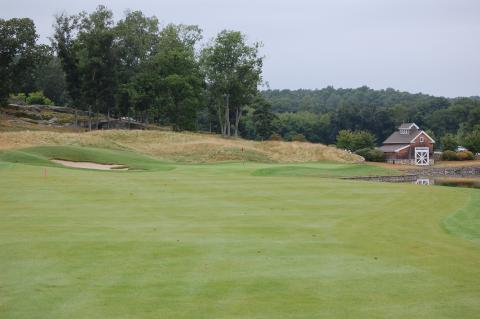
Fox Hopyard can boast one of the nicest looking pump houses on any golf course. It provides a nice background at the par 5 18th.
Thanks to you
August was the best month in Golf Community Reviews' short happy life. Almost 4,000 separate visitors made 7,500 visits to the site last month and read more than 43,000 pages of material, surpassing our previous best months by
This is more than wishful thinking; in August, I received the most inquiries ever about specific areas in the southeast and about the specific golf communities in those areas. I answer every inquiry I receive fully and with the offer to do further research and make some recommendations without any obligation or fees, whatsoever. You can reach me through the "Contact Us" button above, or by clicking here.
The less humble side of me is convinced that the quality of Golf Community Reviews has something to do with its success at attracting those with an interest in golf real estate. Since the beginning about 30 months and
A home on a golf course could very well be the last major investment many of us make, and I take seriously my responsibility as the enemy of all the hype out there -- on the Internet, in publications like Where to Retire, and especially in developers' sales offices.
To my faithful readers, I am grateful that you noticed.
A day at Aspetuck Valley, Weston, CT
As a member of the Junior/Senior Golfing Society of Connecticut, I have the opportunity to play a handful of private golf courses in the state each year that I might otherwise have to beg to play. The Society is a few decades old, and the "junior" part refers to those under the age of 60 but over the age of 40. I qualify for the Senior division and today, at the up and down, beautifully manicured Aspetuck Valley Golf Club in Weston, CT, I felt old indeed.
The course is one of those not especially friendly to first timers, with blind tee shots and many false fronts on the
The food as Aspetuck was exceptional for club food, the chef a recent import from California's Napa Valley where food expectations are as high as they are in France. It showed at lunch and dinner, where the steak was cooked to a perfect medium rare. It sat under a skewered couple of grilled shrimp and above a spinach and fillo dough square that probably should have been pushed off to the side (or off the plate entirely). Nevertheless, the food and bonhommie made me forget the five golf balls I lost in woods, water and heather, and the slight dizziness from the ups and downs of a tough day of golf. (Photos below were all taken with an iPhone).

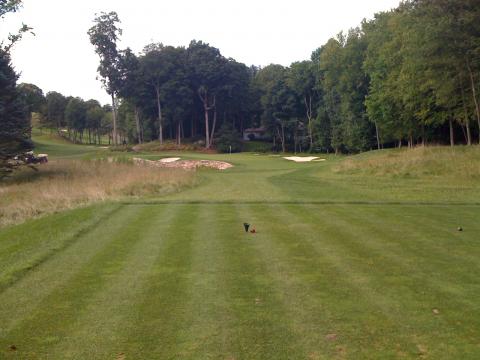
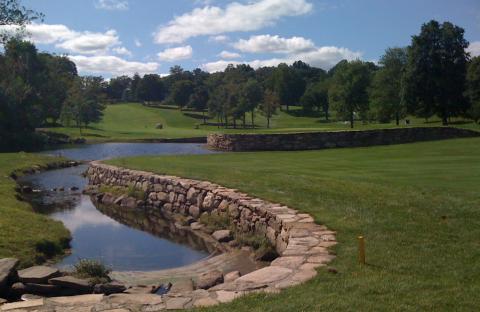
Top to bottom at Aspetuck Valley, the 1st hole, a par 3 on the back nine, and the attractive stone walls that frame some of the greens and fairways.
Family affair: Private style in a public venue
It isn't every day you get to see a hole in one. That was just part of my interesting day on Friday at Fox Hopyard, an upscale daily fee course in a beautiful part of Connecticut that, nevertheless, does not seem as if it would be hospitable for golf (tough to drive to, rocky landscape). Sandy Marcks, who manages the facility with her husband, Richard, lofted a perfect pitching wedge shot on the par 3 8th hole that landed 10 feet short of the cup and dropped into the front as if it had been a two-foot putt. It was her first hole in one, and I felt like a rabbit's foot, since I had not met her until that day.
Richard and Sandy were great hosts for my son, Tim, and me. Richard is one of those lifetime golf industry guys who has made a point of learning every aspect of the business, from the bottom up, literally. He started in the business fixing golf course equipment. He also knows as much about grass as anyone I have met, which is not surprising once you learn he has both studied turf science and taught it to aspiring course superintendents. He has designed and built machines that take care of golf course maintenance work. A residential architect as well, Richard worked with Robert Trent Jones, Sr.'s design firm and later with former Jones protégé Roger Rulewich. Rulewich designed the three courses that make up the Fox Group (the others are Crumpin Fox in rural Massachusetts and Fox Hollow near Tampa, FL).
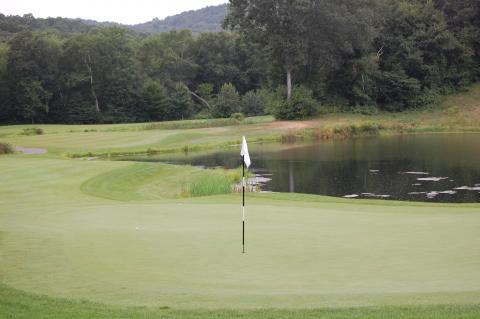
The short par 4 7th hole at Fox Hopyard requires a deftly placed drive between water on one side and marsh on the other. A fairway wood or hybrid off the tee should leave no more than a 9 iron to the hole -- for the second or third shot!
Today,
Richard and Sandy, whose background in marketing and graphic
design is a complement to Richard's own operational experience, are a visible presence at Fox Hopyard. Richard maintains full management authority for all the courses in behalf of the
Sandri Companies, whose eclectic holdings include oil distributorships and
manufacturing companies, in addition to the three golf courses. Richard and Sandy run Fox Hopyard like
a well-oiled service business fully focused on the customer. For anyone doubting that the customer is
king at Fox Hopyard, consider a story from a friend of mine who, upon hearing I
had played the course, told me about his experience at the Hopyard a few years
earlier, when he arranged a golf outing there for eight family members.
distributorships and
manufacturing companies, in addition to the three golf courses. Richard and Sandy run Fox Hopyard like
a well-oiled service business fully focused on the customer. For anyone doubting that the customer is
king at Fox Hopyard, consider a story from a friend of mine who, upon hearing I
had played the course, told me about his experience at the Hopyard a few years
earlier, when he arranged a golf outing there for eight family members.
"We were a few minutes from teeing off," he told me, "and this foursome arrives with their shirts hanging out, yelling as if they were at a Yankees/Red Sox game and possibly showing the effects of a few early morning drinks." My friend recalls his anxiety at the possibility the loud group might be playing in front of him, his dad, brothers and cousins. Fox Hopyard's pro came out to speak with the loud group, was not satisfied they would behave themselves, and asked them to leave.
"He [the pro] came over to me," said my friend added, "and, with a wink, said, ‘Nothing to worry about.' I hadn't complained but he somehow knew I was nervous about it."
Fox Hopyard, which has 200 members, aspires to offer the high level service of a private club. From my experience, it succeeds. I will publish a full review of the course here in the next few days, including some notes about real estate opportunities amidst the adjacent trees.
[Editor's note: As always, I paid for our green fees at Fox Hopyard to maintain both my objectivity and the perception of it.]
Dreams and nightmares of Yale
Investing in a home on the course...for life
Now on Sale

- The only book about golf communities in the last 10 years.
- 156-page step-by-step guide to finding your dream golf home.
- Info on nearly 100 golf communities the author has visited.
- Paperback version costs less than a sleeve of Pro VIs.
Here is what the experts are saying:
“The book is chocked full of information…applicable to anyone looking for a move to the Southeast regardless of whether they are looking for a golf community or not.” — John LaFoy, golf architect (Linville Ridge CC, CC of Charleston, The Neuse GC)
“Larry has done a tremendous amount of work and anyone — like me — who is looking to search for a golf home now or in a few years needs this book.” — Brad Chambers, golf blogger, ShootingYourAge.com
“Wow! What a thorough piece of work…a must for anyone moving South. This book will help many people.” — Brett Miller, owner and founder of MMA, Inc, a golf industry consultancy
Buy It Now at Amazon.com or BarnesandNoble.com.