Saturday musings
If you plan to take advantage of one of those low price golf community discovery visits I've written about, but you don't look forward to driving round trip, check out AutoDriveaway.com. The firm arranges for personal cars to be relocated from one city in America to another and finds people to drive them, without any rental charges (in some cases, the driver pays for a few tanks of gas). The drivers, who apply to AutoDriveaway and must meet some basic criteria, can go online to see what locations are available (they change day to day). Currently, for example, a 2008 Ford Explorer in Atlanta is available to be driven to Malden, MA, just north of Boston. In this case, the owner pays for all gas.
The Mexican retirement cartel
American tourists in Mexico are being targeted -- no, not by drug cartels or corrupt Mexican police or smugglers looking for mules. They are instead in the sights of real estate developers, according to a recent story in the Dallas Morning News.
Mexico is a beautiful country with an impressive topography, especially along the slim Baja California, surrounded by water, the Pacific on one side and the Sea of Cortez on the other. Many Americans, some of my friends included, have beautiful homes in golf communities like Cabo San Lucas and other American friendly towns up and down the coast. Jack Nicklaus and his fellow leading designers have used the local terrain as landscapes for their seaside courses. Late last year, Tiger Woods announced he would design his third course on a peninsula near Ensenada, a Mexican resort town 65 miles south of San Diego.
Call me an American chauvinist, but with all the great golf communities here in the U.S., at deeply discounted prices from just a few years ago, I wonder about the attraction of Mexico, with its drug cartel murders and odd ownership rights (you own your home for only 50 years if it lies within 30 miles of a coastline). If you really want to purchase property on a Tiger Woods golf course, what's wrong with his layout at The Cliffs Communities, not far from Asheville, which is slated to be ready in 2010 or early 2011.
The Dallas Morning news article is available on many newspapers' web sites. I've chosen the Cleveland Plain Dealer (click here); it includes a map of Mexico that indicates the numbers of drug cartel murders by region.
 Home On The Course newsletter
Click here to sign up for our Free monthly newsletter, loaded with helpful information and observations about golf communities and their golf courses.
SAD story where the sun don't shine
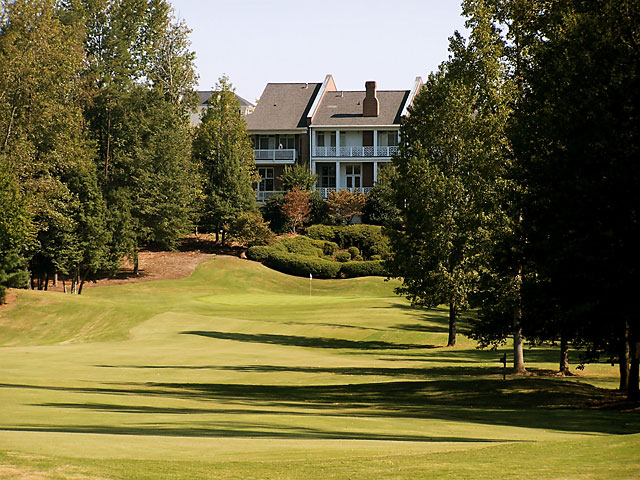
Greenville, SC, has more days of sunshine than any other town in the Carolinas. It also has the wonderful Thornblade Club and its classic Tom Fazio golf course. The surrounding homes are not in a planned community and offer a viable, less-costly alternative to amenity-laden developments.
I had never heard of Seasonal Affective Disorder (SAD) before I opened the Tuesday edition of my Hartford (CT) Courant. The AP story began by discussing a Wisconsin woman who said that she would "turn into a slug" during the winter. My interest was piqued; in just the last few weeks, a Wisconsin couple had asked me to help them find a piece of property in the southeast because they were fed up with winters, and especially the snow. I mentioned the article to my wife, and she said her late mother had SAD. I didn't know that.
Referred to also as winter-onset depression, SAD may affect a half million people, according to the American Academy of Family Physicians. In the AP article, a SAD expert, Dr. Norman Rosenthal, described the symptoms this way: "You'll start slowing down, have difficulty waking up, difficulty concentrating, you'll start craving sweets and starches." And desperately miss playing golf, I might add.
In any event, the best treatment for SAD, according to the Mayo Clinic's web site, is sunlight. Therefore, as a public service, I refer you to a web site that lists cities in order of most days of sunlight annually. Click here. Yuma, AZ, with 242 days of sunshine per year, blows away the competition. But that still leaves 123 days when Yumans should lock away their candy.
The sunniest city in the southeastern U.S. is Apalachicola, FL, with 128 sunny days per year. Maybe the remaining 237 not-sunny days are necessary to help breed fabulous oysters, which Apalachicola is known for (I've had them; they are great). Outside of Florida, Greenville, SC, is the sunniest city in the southeast, with 121 bright days. I've been there a few times; it is a thriving city with a stable economy (BMW plant in nearby Spartanburg) and an excellent range of golf courses and communities, including the lush and expensive Cliffs Communities and the warm, welcoming Tom Fazio-designed Thornblade Club in nearby Greer.
If you are fed up with the winter, contact me and I will send you information about Greenville or any other golf rich area where the sun does shine.
Starting over?
I received today the following short email from a friend and former business colleague:
"I'm having all these intense flashbacks to the mid-1990s; you know, when the Dow was 6,600 and we were totally pumped about it...."
Or maybe, as the Beatles said, we are getting "back to where we once belonged." I read the other day that 50% of all stock portfolio holdings are now in money market funds, in other words cash. I also noted here recently that while many homeowners' equity has been savaged in the last three years, many millions are in homes they bought a decade or two ago, before the major run-up in prices that caused the speculative buying and the sub-prime borrowing that led us to this moment in time. They have equity, in many cases a substantial amount.
I am also hearing from real estate agents in a range of markets that 2008
Today, in a conversation with Marian Schaffer, a professional real estate broker who specializes in southern U.S. properties, we agreed that a lot more cash than meets the eye is waiting on the sidelines. Marian, who is the principal of Marian Schaffer Realty, made an additional point about market psychology that I think is extremely relevant to the times we are in.
"After the Enron fiasco," she said, and I am paraphrasing a bit, "many people lost some faith in the credibility of the stock market. Now, all those people who invested in blue chip companies like General Electric may never come back to the stock market. What are they going to do with their money?"
She answered her own question: "They are going to figure, what the heck, I can go buy a nice house in a warm climate, have a nice life and forget about the stock market."
I agree, and I also repeat that when the housing market stabilizes, that giant sucking sound we hear will be millions of baby boomers heading to warmer climates. Those on the early edge of the migratory flight will reap the best bargains.
Marsh Madness: Carolina Low Country on itinerary for this month
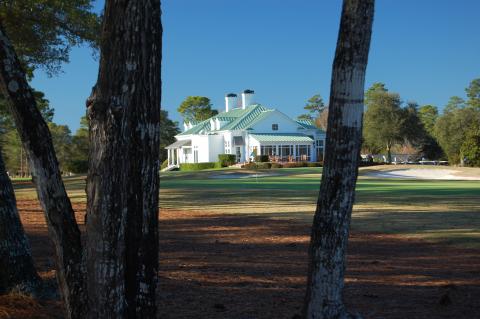
The Reserve Golf Club of Pawleys Island community and its Greg Norman designed course are on LINKS magazine's list of "Best for Value" golf communities. I will re-visit the community in a couple of weeks.
Tell me where to go (which communities, that is)
The long winter of my discontent is about to end. I head south on Monday with wife and daughter for a school-break vacation in Pawleys Island, SC. When they head back to Connecticut at the end of the month, I head deeper into a Low Country wilderness that is home to a staggering array of excellent golf communities along the coast near Hilton Head. Many of these
I am giving myself five or six days to visit and review some of these well-regarded communities. I may not have time for all of them; therefore, dear reader, if one of them is on your list, or any others in the area for that matter, please let me know and I will move heaven and turf to check it out for you. That goes, by the way, for any communities in the Myrtle Beach area. Grande Dunes, The Reserve Club in Pawleys Island and Wachesaw Plantation (Murrells Inlet) all made LINKS ' "Best for Value" list. I know these communities well, but much has happened in the leisure residential market in the last few years. I do not need much of an excuse to pay a few return visits.
The high and low of golf community "discovery" tours
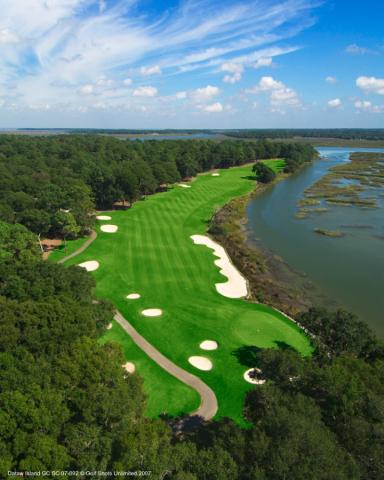
For lovers of the marsh and designer golf, a few days spent at Dataw Island could convince you to stay longer...like forever. Photo courtesy of Dataw Island Club
There was a time not too long ago when some people actually bought golf community properties sight unseen (site unseen, actually). You could do that when price appreciation everywhere was a straight line up. But in the current environment, no one (I hope) will be that foolish, and golf communities know it.
Most marketing in golf communities is geared toward one thing -- getting the potential customer onto the property. Once there, the success rate of turning a prospect into an owner is pretty high. Some developers have told me their conversion rate is as high as 20%, but even at the more customary 5% to 10% rate, the effort to get people to look at what you have to offer and play your golf course is worth the time and discounted stays.
Nothing is more effective than the ubiquitous "discovery tour," which
Today, I received two invitations to discovery tours -- I'm on everyone's list -- that run the gamut from the short, sweet and downright cheap to the languid, luxurious and comparatively pricey (but less than you would pay for a similar vacation at a high-end resort).
At one end is Brunswick Plantation, just north of the Myrtle Beach area in Calabash, NC. Brunswick is running a "Getaway Special" for just $10 per night, the lowest rate I have seen anywhere. For an Alexander Hamilton per night, you can stay in a one-bedroom condo on the 1,750-acre gated property for up to four days, and take advantage of the walking trails, seven pools and other amenities. The publicly accessible 27 holes of golf -- by Clyde Johnston and Willard Byrd -- are available at just $40.50 per round, cart included. About a third of the community is built out, but there are plenty of lots remaining (developer lots and re-sales). Lots at Brunswick Plantation begin below $50,000 and top out around $325,000. Condominiums begin in the low $100s, with single-family homes starting around $200,000 and reaching the $600s.
Dataw Island is one of Travel & Leisure magazine's Top 100 golf communities. At $345, its "Experience Dataw" package seems priced to keep away all but serious prospects. But for three days and two nights in one of Dataw's water view Bluff Villa town homes, you won't do better at any top golf resort, and you will be treated like a member. Included in the package is a round of golf per couple at one of the community's two stellar private courses by my two favorite designers, Arthur Hills and Tom Fazio, and the run of the property; you can even dine in the clubhouse if you like. Membership Director Silvia Lalinde also told me the club will be flexible about granting a second round if one half of the couple does not play golf.
The 870-acre Dataw is about 75% built out, but some developer and re-sale lots are available. Prices start below $100,000 for lots and around $300,000 for homes, but some seven-figure properties are not unusual, especially out on the beautiful marsh. Dataw's location, in the heart of the Low Country, will make a two-hour guided tour of the property seem like no burden at all.
Bad news on boomer wealth should not be stop sign for those who dream
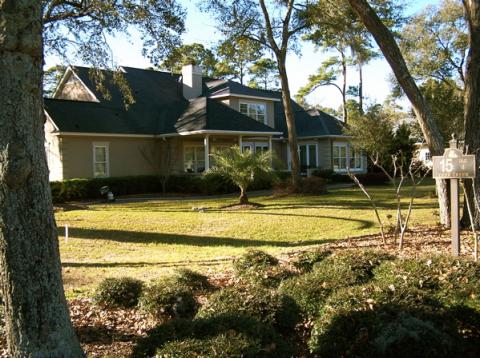
The Landings at Skidaway Island is a sprawling community that features six excellent golf courses, a range of home styles and prices and a location just 15 minutes from Savannah, GA. Home prices in Savannah have dropped an average of just 3.3% over the last year, according to Zillow.com
I may be the last one who should advise others to ignore the loss in their home's value, take what equity they have and move to that dream home on the golf course in the southern U.S. After all, I have stood as still as Lot's wife watching what stocks I own drop by as much as 50% (or, in the case of Bank of America...well, never mind). At each 10% increment on the ride down, I would suggest to my wife that we should cash out a substantial part of our modest stock holdings and stow the money in something ultra-safe, like FDIC-insured certificates of deposit. After all, a safe 2% annual gain is a lot better than a 2% loss on what seems an almost daily basis. And yet the feeling that it can't get any worse would creep in and the urge to sell would pass.
We don't need a white paper to tell us all we have lost an enormous
CEPR's study is illuminating and depressing in its comparison of home equity and net wealth amounts for baby boomers between 2004 and 2009. Their most riveting information is that "nearly 30 percent of households headed by someone between the ages of 45 to 54 will need to bring money to their closing" when they sell their home. (In 2004, the figure was a mere 3 percent of owners.) In other words, the sales price on these homes will generate less than 6% in equity for the sellers (the 6% represents real estate commissions and other costs of closing). In the older group of baby boomers, ages 55 to 64, more than 15 percent will need money at closing, up from just 1 percent in 2004.
The glass-half-full story, though, is that more than 20 million boomers do have equity in their homes, at least for now. Those with equity, especially those who have paid off their mortgages, should have no financial impediments to relocating to their dream home, assuming they have no personal or family obstacles. As I have written here before, my wife and I are ready to go except for a high school junior whom we do not want to uproot before graduation (and except for the accumulated stuff it will take us two years to dispose of).
Today I looked at some year over year housing trends in the southern U.S. and compared them to those in my Connecticut town. Where I live, home
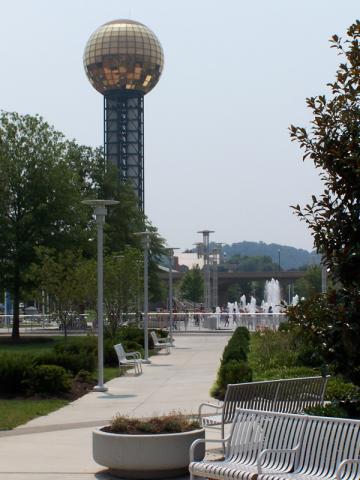 prices have dropped 8% over the last year, not a disaster but it still hurts. In many areas of New York, Massachusetts and New Jersey, for example, the dips have been steeper. In some southern markets where many large golf communities were developed within recent years, the drops have been similar. For example, Mt. Pleasant, SC, just north of Charleston, has seen an 11% dip in year over year numbers. But in other areas where development was more measured, like Knoxville, TN (down just 1%) and Savannah, GA (down 3.3%), the slide has been more gradual. (Note: Figures are from Zillow.com). Should the trends continue at similar rates in my town in Connecticut and these towns in the south, the spread between the price I will get for my house and the one I might buy in the south will widen. Cost of living figures in the south are generally lower than up north, so as each year goes by, I am losing out on those savings as well.
Waiting for my primary home's price to improve before I relocate has another downside. When the market does stabilize, all those baby boomers who have been waiting to relocate will swell the migration numbers headed south. Home prices in the Carolinas and Georgia and, yes, even Florida, will recover more quickly than those of the northern states. Who knows? Maybe think tank studies five years from now will show that those who made the move in 2009 and 2010 were as smart as those who chose to rent instead of buy from 2004 on.
The CEPR study is fascinating, if a little depressing. You can access it by clicking here. If you would like me to explore the difference in home price trends in your hometown and towns where you might like to move, let me know and I would be happy to run the numbers and research some potential properties for you. There is no charge for this service.
T&L Golf readers choose Carolinas & Georgia as best area to live; Florida finishes second
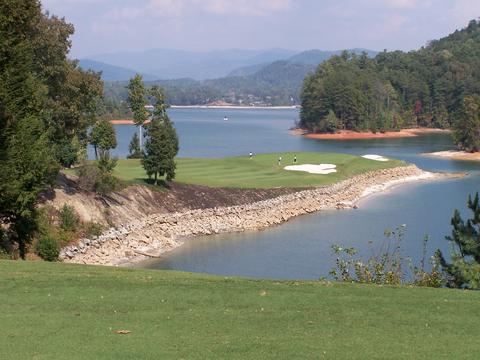
I've used this photo of the 17th at the Cliffs' Keowee Vineyard golf course often because it remains one of the most memorable holes I have played. The par three requires a driver or three wood from the tee to a green surrounded by trouble. The hole (and course) were designed by Tom Fazio. The Cliffs is high on the list of Travel & Leisure's best golf communities.
The readers of Travel & Leisure Golf magazine, a rather upscale demographic, has voted the combined area of the Carolinas and Georgia (with 26.2% of the vote) as the best place for a golf home. Florida (25.6%), which sports almost three times the number of courses as the Carolinas and Georgia combined, finished a close second. The stragglers included California (15.3%), Arizona (14.9%), the Rocky Mountains (9.6%) and the Pacific Northwest (8.3%).
Although this is a far from scientific study, the results hint at the continuing migration of golf community residents from Florida to the states a little farther
For those making the move to the Carolinas or Georgia from Florida and elsewhere, T&L Golf suggests the golf communities you might consider. At the T&L web site is a list of the magazine's take on the top golf communities in the U.S. South Carolina developments occupy three of the top six positions, with Palmetto Bluff in Bluffton at #2, the Cliffs Communities (various locations in the Carolina mountains) in the fifth position and Kiawah Island holding down the sixth position.
The best community, according to T&L, is Pronghorn in Bend, OR; third and fourth places are held down by the California communities at Santa Lucia Preserve in Carmel, CA Mayacama in Santa Rosa, respectively. The golf courses at two of the top three communities were designed by Tom Fazio; Palmetto Bluff was the work of Bill Coore and Ben Crenshaw.
Builder magazine's unhealthiest markets
For the entire list, go to BuilderOnline.com. This coming week, the magazine will post its ranking of all 75 cities in its survey.
Builder magazine's healthiest housing markets
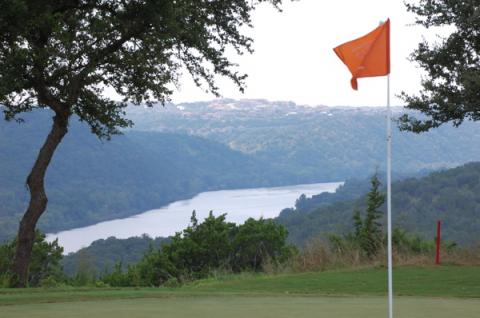
Austin, TX finished high on the Builder magazine list of healthiest housing markets. The University of Texas Golf Club sits above Lake Austin, about 20 minutes from the city and university itself.
Texas towns sweep top five positions; Raleigh, Charlotte, Wilmington and Myrtle Beach make top 15
I don't know if I would put total faith in a list that ranks Houston the "healthiest" housing market in the nation. From what I know, including the personal experience of a young couple trying to sell a home there, Houston has a large inventory of homes on the market. But a check of Zillow.com 's trend line for housing prices in Houston shows the median price of homes there dropped less than 1% last year, indicating an impressive stability. Maybe Builder magazine, which uses housing permits as well as more traditional measures of a market's health, is on to something.
The magazine's five choices for healthiest markets are all in Texas, with Austin, Fort Worth, San Antonio and Dallas following Houston in order. Austin, which I have visited, has a range of excellent golf communities, a major university, terrific food (especially if you like barbecue), an interesting landscape (the Hill Country) and no state income tax. San Antonio, one of the nation's most popular towns to visit, has seen impressive development of golf communities in the surrounding area.
North Carolina cities fared well in the survey, with Raleigh in the #6 position, Charlotte #13 and Wilmington #14. Myrtle Beach, which the magazine considers straddling the South Carolina and North Carolina border on the coast, finished at #15. Nashville, TN, finished 11th and Fayetteville, AR, a strong 9th.
You can find the list and the rationale for the magazine's choices at BuilderOnline.com.
Getting a move on to...Charlottesville, VA
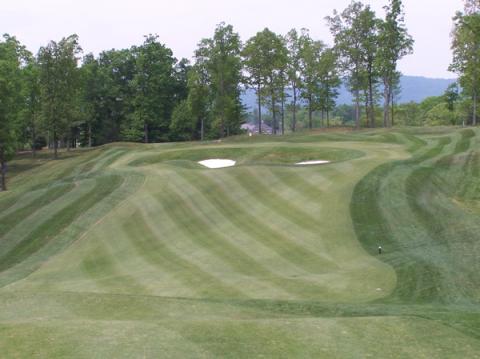
In the foothills of the Blue Ridge Mountains, Glenmore is just one of the local golf community courses that feature gently rolling terrain.
Many folks with equity in their homes can give themselves a raise by relocating from a relatively high cost of living area to a lower one. In some cases the improvement is modest but, in others, it can be quite dramatic, enough to spur to action those who have deferred their dreams of a golf home because they are concerned about the value of their home. As I have written here ad nauseum, if you have equity in your home and a desire to move to a golf rich area in a warmer climate, timing does not matter as much as you may think. Someday, home values will level off and begin to rise again. Because of simple demographics -- all those baby boomers wanting to move to warmer climates -- home values in general will rise faster and farther in the southern U.S.
Today I offer the first in an occasional series of reviews of great places for golf community living.
For golfers who don't mind a four-season climate -- minus too much snow -- Chapel Hill, NC and Charlottesville, VA top the list of best choices. I'll cover Chapel Hill in a future review.
Charlottesville, home to the University that Thomas Jefferson built, may not be the most inexpensive place to live in the southern U.S., but folks moving from a number of populous cities in the north may think so. Here are a few examples of cost of living improvements with moves from some cities to Charlottesville (in % decrease):
Baltimore, MD (12%)
Bethesda, MD (18)
Boston (18)
Chicago (6)
Hartford, CT (10)
Minneapolis (4)
Nassau Cty. NY (28)
Philadelphia (14)
Providence, RI (10)
Source: Where to Retire magazine, March/April 2009
From 2007 to 2008, median prices in the Charlottesville market declined about 5%, although prices in Albemarle County, home to some of the nicest golf communities in the area, increased 4%. People who move to the area do so for a four-season climate and the vibrancy that is unique to a major university town. In the case of UVA, this includes big time college athletics, an active continuing education program, outstanding restaurants and cultural venues, and a friendly, yet live-and-let-live vibe that makes northerners feel somewhat more at home more quickly than in other towns in the south.
I devoted an entire issue of my former newsletter to Charlottesville and its golf communities, and I'd be happy to send it with my compliments. Send me an email by clicking here. In the meantime, here are the highlights.
Glenmore, Keswick, VA
Golf course designed by John LaFoy
6,849 yards, par 72, rating 73.0, slope 138
Initiation fee: $20,000. Monthly dues: $471
The golf club is for members only.
Glenmore, just 20 minutes from Charlottesville, appeals to a broad spectrum -- active families, many tied to the University of Virginia family; empty nesters; and retirees. Most of the gated community's residents -- some are university professors -- are still working, even though they may not venture far from the community. "The home office is an important room" in Glenmore homes, sales director Tom Pace told me.
The fine golf course shows some Scottish touches, like un-mown areas of tall grass, but it still plays more like a rolling New England course. The dramatic brick clubhouse dominates the landscape and frames the 18th green. The club is a magnet for UVA alumni on the weekends of home football games. Other amenities in the community run the entire gamut, including an equestrian center. Glenmore's position to the east of town puts it about an hour from Richmond and its airport, a good alternative to the smaller Charlottesville airport.
Glenmore's price points start around $275,000 for a half-acre lot, although the developer has just opened up an area of private five-acre lots starting at $440,000. Single-family residences begin at $600,000 for a 4BR, 3 ½ BA home. A group of "low maintenance" Scottish homes on smaller pieces of property start around $525,000; almost all are re-sales. However, one new developer unit is currently listed at $799,000 and includes complimentary golf membership.
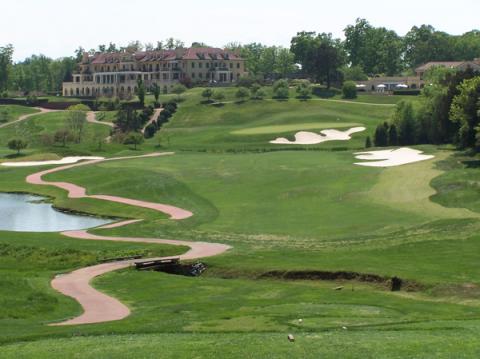
The big baronial Keswick Hall dwarfs the big, brawny Arnold Palmer layout at Keswick Estates.
Keswick Estates, Keswick, VA
Golf course designed by Arnold Palmer
6,306 yards, par 71, rating 70.2, slope 130
Initiation: $21,000. Monthly dues: $435
The club is private but guests at Keswick Hall are invited to play
Keswick Estates feels baronial. Its centerpiece, the yellow stucco 48-room Keswick Hall, was built by a local magnate in 1912 and was tripled in size in 1990 by Sir Bernard Ashley. He sold the entire estate, Keswick Hall and the surrounding 600 acres, to British firm Orient-Express in 1999.
The gated Keswick Estates anchors the high end of the Charlottesville golf community market, with lots beginning above $300,000 and big single-family homes beyond the $1 million mark. You will not find any villas or condos in Keswick.
I found the Palmer layout, a reworking of the original course by Fred Findlay, to be dramatic and the course in fine condition. Keswick Hall looms over the course from its position at the highest point in the estate, and it is quite a sight as you come along the upward sloping 18th fairway. Palmer's sculpting and humongous sand bunkers take a bit away from the beautiful piece of rolling, natural landscape, but those who go in for golf on an aggressive scale (just like Arnie's golf game in his heyday) will like his layout at Keswick.
Residents will find much to like about the short (15-minute) drive to Charlottesville, the easy access to services and the feeling of privileged seclusion and security. Because of a local zoning ordinance, the land surrounding Keswick is designated "agricultural" and will never be turned over to real estate developers.
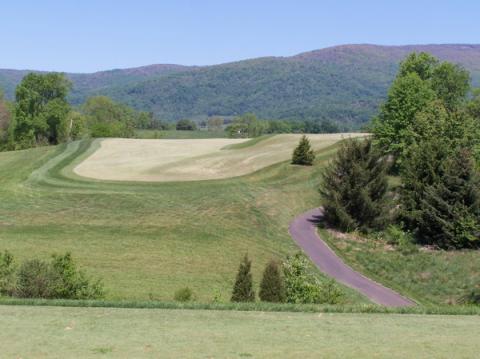
The Blue Ridge Mountains frame the golf course at Old Trail.
Old Trail, Crozet, VA
Golf course designed by Jerry Kamis
6,700 yards, par 72, rating 72.3, slope 129
Initiation fee: $4,000. Monthly dues: $250
The golf course is open to the public
Old Trail, 20 minutes west of Charlottesville, is set on a gently rolling property within sight of the Blue Ridge Mountains. What sets Old Trail apart from other golf communities in the Charlottesville area is its emphasis on its residents' legs. Its town center, finally under construction after a few years wait, is at the heart of the community, an easy bicycle ride or decent walk from any of Old Trail's homes. Architecture of the residences in Old Trail is emblematic of the historic row houses of such southern cities as Savannah and Charleston. Single-family home sites begin around $145,000, with homes available from $600,000.
Unlike many other planned communities, Old Town's developers let their buyers choose from among more than 100 house plans; there is nothing boring about the combination of homes, and the effect is more eclectic than chaotic. Those looking for simpler housekeeping chores, and much lower buy-in prices, can choose from among a variety of condos and villas. Two of the villas, at 1,440 and 1,970 square feet, are currently listed at $199,900 and $314,900, respectively.
The Old Trail Golf Club course tries hard to look like a Scottish links, but it is just a solid foothills course. Membership is extremely reasonable, but you do have to share the course with the public. A few odd holes, including a steep drop-off at the end of the fairway on the 18th, do not ruin the fun of a round at Old Trail.
One final note: When I first drove through Old Trail two years ago, I was taken aback by a huge wooden arc standing a few stories high. The hundreds of people milling around and the elephants and other beasts walking two by two added to my confusion. Old Trail, it turned out, had been chosen as the backdrop for the filming of the big-production movie Evan Almighty, a comedy about a U.S. congressman turned modern day Moses. Given the un-funny economy today, if Old Trail's town center indeed is completed later this year, residents may consider it another miracle.

The movie Evan Almighty was filmed at Old Trail in the early stages of the community's development.
January housing data mostly cloudy
One benefit of getting a move on
Three $1M homes on block at Ford Plantation
Golf property owners turn to eBay

Now on Sale

- The only book about golf communities in the last 10 years.
- 156-page step-by-step guide to finding your dream golf home.
- Info on nearly 100 golf communities the author has visited.
- Paperback version costs less than a sleeve of Pro VIs.
Here is what the experts are saying:
“The book is chocked full of information…applicable to anyone looking for a move to the Southeast regardless of whether they are looking for a golf community or not.” — John LaFoy, golf architect (Linville Ridge CC, CC of Charleston, The Neuse GC)
“Larry has done a tremendous amount of work and anyone — like me — who is looking to search for a golf home now or in a few years needs this book.” — Brad Chambers, golf blogger, ShootingYourAge.com
“Wow! What a thorough piece of work…a must for anyone moving South. This book will help many people.” — Brett Miller, owner and founder of MMA, Inc, a golf industry consultancy
Buy It Now at Amazon.com or BarnesandNoble.com.