Oh what fun it is…: Palm Beach Par 3
Longtime reader Elliot deBear contributes occasional reviews and photos. During a recent trip to the Palm Beach area, he tested out a totally renovated par 3 course. Elliot's review, for which we thank him, follows.
by Elliot deBear
I don’t often take time to play executive courses, but the Par 3 course on South Ocean Blvd., located between the Atlantic Ocean and Intra-coastal Waterway, is worth a mention. The course was originally a Dick Wilson design built almost 50 years ago. The course was closed last year, totally ripped up and redesigned by Raymond Floyd for a November 2009 opening. When I say “ripped up,” I’m talking about redesigned holes, expanded length, new fairways and greens, expanded ponds, added traps, new waste bunkers as well as new trees and fescue plantings.
Floyd did a remarkable job here. This 2,572 yard beauty is so much fun to play, with insane winds coming off the Intra-coastal on the front nine and the Atlantic Ocean on the back that you will want to try your hand a few times. The wind makes it a different experience each time as it is always changing in direction and velocity.
The picturesque back nine features a number of holes framed around a large pond and against the Atlantic. It requires some thought on club selections given the winds and pin locations. Holes range in length from 81 to 211 yards. Overall, there are eight holes over 140 yards long, not bad for an executive track. There is also a small practice green and full driving range on the premise.
If you have 2 1/2 hours to kill in the Palm Beach area and want to have some real short game fun, The Town of Palm Beach Par 3 Golf Course is definitely a winner.
Editor’s Note: The Palm Beach Par 3 is located on South Ocean Blvd. in Palm Beach, FL. 18-hole rates during peak season (now) range from $28 to $45. Rates are lower for guests of some local hotels. Web site: http://golfontheocean.com

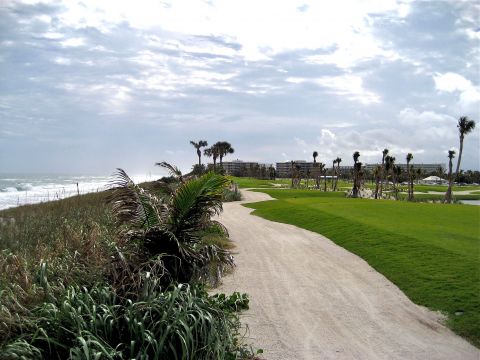
Palm Beach is not your ordinary par 3 course, with testing water holes and scenic views of the Atlantic Ocean. Photos courtesy of Elliot deBear.
 Home On The Course newsletter
Click here to sign up for our Free monthly newsletter, loaded with helpful information and observations about golf communities and their golf courses.
NBC Sports blog mentions our web site
The motherlode for a modest little blog site like the one you are reading now is for another site that attracts thousands of readers daily to mention it. Yesterday, we hit the motherlode when Rick Chandler, who writes the "Out of Bounds" blog site for NBC Sports, posted two links to GolfCommunityReviews.com as part of a story about Tiger Woods' off course problems. Our site customarily attracts about 200 visitors a day, but yesterday we hit the 1,600 mark.
You can read Rick Chandler's blog post about Tiger Woods at NBCSports.com.
Happy New Year: Existing homeowners receive a little stimulation too
Many economists and real estate industry professionals are crediting the $8,000 first-time homebuyer tax credit with preventing the housing market from falling totally off the cliff in the face of massive foreclosure rates. But some folks may not be aware that current owners of homes can get in on the act too.
As long as you have owned your principal residence for five years out of the previous eight and you purchase another primary residence before April 30, 2010, you will receive a tax credit of $6,500 (for joint filers) after you sell it and buy another. You must close on your new home by July 1, 2010 and use it as your new primary home. The total cost of the home you buy must not exceed $800,000 and the income limit for eligibility stops at $225,000 for a married couple.

The $6,500 tax credit can cover many expenses, including a Scottish golf vacation that includes a round or two of golf at St. Andrews' Old Course.
Okay, the $6,500 tax credit may not seem like much motivation, but it is better than a sharp stick in the eye (or nine-iron to the face*). For one thing, it is equal to a year’s worth of dues for most good golf clubs in southern communities. It will cover fully the costs of a 10-day Scotland golf vacation for two, with airfare and a couple of rounds at St. Andrews Old Course included. Or you could outfit your new home with three really nice LCD HD TVs, including a 50-incher above the fireplace mantle in the family room.
I have spent part of today researching reasonably priced homes in golf communities in the Carolinas for one of our readers. Many nice homes are for sale in stable communities at prices that are the lowest I can recall in a decade. Whether you intend to take advantage of the tax credit or take your time deciding about your dream home on the course, contact me and we can explore what is available. There is no fee ever for this service and no obligation whatsoever.
* A friend sent me an email allegedly from a friend of a friend of a friend of Tiger Woods’ agent Mark Steinberg. In the note, the friend-a-few-times-removed indicates Steinberg admitted why the Woods family refused to be interviewed by the Florida state troopers in the wake of the star’s Thanksgiving night accident.
Woods’ face, according to the note, was so seriously injured by his wife’s surprise shot with a 9 iron that he required immediate cosmetic surgery. An accomplished doctor in Phoenix was chosen for the job, and the Woods team flew their fallen hero to Arizona for the surgery. With recuperation, the job required a few days. The Woods team hired a local Florida attorney to hold off the Florida state police, fearing that word would leak out about the attack by his wife.
Of course, the rest of us figured out the scenario immediately after hearing that the rear window of the Escalade was smashed, that Woods was driving hurriedly away without shoes on, that the tabloids had a story of alleged adultery and that Mrs. Woods had discovered an incriminating cell phone message. Perhaps the Woods team thought they could fool the state police, but the rest of us are too smart for that.
Migration patterns: Apple takes shine to small NC town
Apple Computer, the iconic American business success story, announced plans last summer to build a $1 billion data center in Maiden, NC, more than an hour from a town whose name most of us
As an economic driver, the Apple data center probably will not be enough to turn around the area’s 15%+ unemployment rate or to turn Maiden into a Research Triangle, the phenomenally successful high-tech area three hours away in Raleigh. But local officials estimate the new center could generate as many as 3,000 supporting jobs. State officials have granted Apple a tax break of $46 million for the data center’s first decade of operation.
Apple employees won’t find a big selection of country clubs in the area. Glen Oaks Country Club, just a few miles from Maiden, includes a few adjacent homes. The course is semi-private and spans 6,450 yards from the tips. The initiation fee is $750 and quarterly dues are just $200. For the public, green fees are less than $30 on weekends. Catawba Country Club is just 10 miles from Maiden and features a Donald Ross designed 18-hole layout at 6,600 yards from the tips. The course opened in 1946, one of Ross’ later designs.
Farther away, but still well within a half hour, Rock Barn Golf and Spa (in Conover) is the centerpiece of a community that features 36 holes of
The move by Apple follows one of similar proportions by Google, who also chose rural North Carolina to locate a large part of its operations. Similar moves by foreign auto companies BMW and Mercedes to build huge plants in the southeast, as well as other companies looking to duck the high costs of operations and dealings with unions in the northern U.S., are supplementing retiree movements south with a lure for people interested in high paying jobs. People also want to live where costs are lower, where the air is cleaner, where it snows only occasionally, and where the roads, at least for the foreseeable future, are less clogged.
Make no mistake about it, population migration will continue from north to south, as well as from Florida north as weather issues, insurance costs and an erosion in standard of living drive people out of the state. In general, expect property values in North Carolina and other selected parts of the south to rise faster –- in some cases much faster –- than properties in the north in the coming decade. Apple and Google are just the leading indicators for those other businesses and individuals who will follow.
Shopping for Bargains: Glenmore, Charlottesville, VA area
From time to time we will feature golf community properties in this space that we believe represent unusual values. (Note: We have not personally inspected the homes but rely on local real estate professionals we know and respect). We will feature only homes in communities we have personally visited and whose golf courses we have played. If you are interested in any property featured here, or want information about any other properties in golf rich areas of the U.S., contact us.
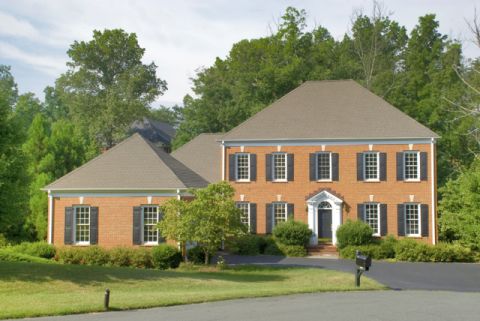
Glenmore home for sale, Keswick, VA.
The Home
Five-bedroom, five-plus bathrooms, 4,235 square foot all-brick home on 1/3 acre at end of cul-de-sac. First floor master bedroom, open floor plan, view of a pond (with fountain), walking trails around pond, all bedrooms with private bathrooms, irrigation system, central vacuum and intercom systems. Owner relocated; his company owns house and and is looking for quick sale. Just reduced to $595,000 from $645,000 (assessed for tax purposes at $664,000). One of 26 homes on the market in Glenmore; prices range from $449,000 to $1.5 million. Glenmore is an established community that is virtually fully sold (developer has two lots and one spec home on the market).
The Golf Course
Glenmore Country Club features an 18-hole John LaFoy layout with both flat and elevated areas influenced by Scottish links courses. LaFoy, who assisted on some of renovations at Augusta National, is a student of classic golf architects like Ross and Tillinghast. At Glenmore, he has channeled some of their influences, including natural-looking bunkers embedded into the sides of hills. The finishing hole features a big sweep up to an elevated green backed by the large brick clubhouse. When I played the course a few years ago, the scoreboard behind the green made me feel as if I were finishing a PGA tournament (all that was missing was the crowds). Initiation fees are $20,000 for full family membership, with dues of $477 per month.
Notes
Glenmore’s residents are a mix of retirees, empty nesters and working families. Because of its proximity to Charlottesville, many of its residents work at the University of Virginia, whose adult education courses are a lure for those who like to combine mental with physical activity. The community is on the Richmond side of Charlottesville, which makes two airports and two interesting cities easily reached. Scottish influence abounds, both on the golf course and in some of the neighborhoods. All that was missing during my visit were the sounds of a bagpiper.
More information
If you have any questions, click here and I will answer them quickly or put you in touch with a professional who knows Glenmore and the Charlottesville area very well. There is a never a charge or obligation for this service.

John LaFoy's design for Glenmore Country Club features changes in elevation and Scottish style bunkering he learned by studying the work of Ross, Mackenzie and Tillinghast.
Don't Worry, It's Only Temporary

To our friends in the northern U.S. and parts of Europe, take heart: Spring is just around the corner.
To our friends in the southern U.S. and wherever the sun is shining and the fairways are clear: The rest of us are jealous.
To everyone, thank you for your interest in GolfCommunity Reviews. Merry Christmas and Happy New Year to all.
Larry
Ouch: Richard Russo character slams golf
I am reading “That Old Cape Magic,” the latest novel by noted author Richard Russo (“Empire Falls,” “Nobody’s Fool,” “Straight Man”). The main character, Griffin, is the product of two academic parents. His mother is a real pip, an arrogant and angry woman who has a comment about virtually everything and everybody.
She even works in a slam at those who play golf.
“Did you or did you not tell me they belong to a country club, that they live in a gated community?” his mother asks Griffin in a one-way discussion about whether he should accept a loan from his in-laws. “Call your father,” she adds. “He and I may not agree on much, but I’m certain he’d never want to owe money to anyone who plays golf…”
Those of us who have lost a $5 Nassau would certainly agree.
Where Tiger holds record, course offers female model caddies
I wrote yesterday that public golf courses would do well to avoid their initial instincts to cut prices and, instead, try some creative approaches to inspire customer loyalty. Today, I stumbled upon a golf club’s web site whose creativity may have inspired Tiger Woods.
Las Vegas area golf course Rio Secco hosted the 2009 Wendy’s Three Tour Challenge in November. The Wendy’s pits teams of pros from the PGA, LPGA and Senior PGA Tours against each other. The tournament was broadcast on TV this past weekend, and the ladies team of Natalie Gulbis, Suzann Pettersen and Cristie Kerr beat the men’s teams.
That was only one example of how friendly Rio Secco is to women (the LPGA team has won there before). A Rio Secco caddy program,
The Rees Jones designed Rio Secco, which is also host to the Butch Harmon Golf School, is apparently a favorite of Tiger Woods. The club was the site earlier this year of the Tiger Jam, a charity tournament for the Tiger Woods Foundation. Woods is the host of the annual event, which attracts such celebrities as Charles Barkley, Pamela Anderson and Eddie van Halen and has raised more than $11 million for the foundation and Vegas area charities since its inception in 1998. Woods showed up for the 2008 event on crutches while nursing his injured knee and before his legendary win at the U.S. Open later that summer.
It should come as little surprise that Woods holds the course record at Rio Secco with a 64, a feat he accomplished in 2007. That was the year Rio Secco debuted its T-Mates idea and, we now know from news reports, a year in which Tiger may have been setting off course records as well. One of his alleged mistresses, Jamie Jungers, is a Las Vegas model, cocktail waitress and caddy. (The web site CaddyChicks.com features Ms. Jungers, indicating she is "Tiger's favorite caddy.") As a female Vegas caddy, she very likely has trod the fairways at Rio Secco and may just have inspired Woods’ record round. But also in 2007, Ms. Jungers has told interviewers, Woods dropped her when she mentioned her financial difficulties to him. She also said he never paid for meals or tipped servers while the two dated.
In some things, apparently, he showed a lot of control.

Rio Secco scorecard, which notes Woods' record round, hole by hole.
Don’t discount courses that don’t discount
As private golf club fees become out of reach for more and more baby boomers and younger working families, dedicated golfers are looking to public golf courses for bargains. They won’t have to look far, based on what I encountered during eight weeks driving around New England recently. My discussions were a real opener about the state of the daily-fee golf business.
Most of the public-accessible courses I visited and most of the golf course operators I spoke with
This single-minded drive to poach on their own published rates, including the ubiquitous use of online tee times, is blinding some golf course operators to more creative avenues of promotion, some of them free for the asking. And it is angering many of their competitors who see rabid discounting as a slippery slope toward cementing customer expectations about price for the long term. These club owners would prefer to increase service to their customers instead of gutting their price structures, discounting a little only as rewards for customers who sign up for their loyalty programs.
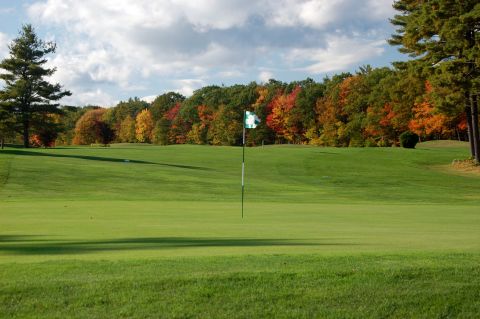
New Hampshire's Candia Woods Golf Club has chosen to invest in customer loyalty. Its discounts are reserved for those who sign up for the club's "Preferred Player" card.
I found a strong amount of ennui among many of those course operators I spoke with, as if the current economy was beating them down. They acknowledge, when pressed, that competition for golf rounds in the current environment is intense, but only a few had any response except to cut prices. Perhaps age has something to do with it; I estimate 90% of the golf course operators and marketing directors I met were either under the age of 35 or over the age of 50. Some seemed barely out of college, and nothing has prepared them for the current economy. Those whose instinct may tell them that gutting their price structures may not be the right thing to do responded to my questions with, “That’s what my owners want.” The blind leading the inexperienced is not a winning combination.
More experienced golf professionals just seem tired and not particularly energetic about creative approaches to a falloff in business. Everyone is hurting, but those who have concentrated more on loyalty programs than price-cutting appear to be doing okay. Clubs like New Hampshire’s Candia Woods and its companion course, The Oaks, for example, have built a large database of golfers’ email addresses that the courses use to promote last-minute specials, a “Preferred Players Club” that provides a 10% discount (their only discount), and even email reports that alert golfers to good weather a day or two out. Owner Peter Harrity, who contributes an opinion piece at the club’s web site, has been through enough industry downturns to know that short-term fixes like rabid discounting can have long-term negative consequences. He is also promoting hard more golf outings and events like weddings to fill the gap in lost revenues from green fees.
Some simple math: A 50% discount on $50 green fees amounts to a loss of $100 per foursome. At an average seven tee times per hour, and about seven hours per day to send out foursomes, the big discounters risk
There are tons of creative ideas golf courses might try before they take the discounting plunge. Here's one I would consider if I owned a course that saw the benefits of building customer and brand loyalty: Set up a table behind the 18th green and greet all incoming golfers with a glass of champagne and hors d’oeuvres. Such a club will generate local and possibly national press, and will build a reputation for caring about its patrons. Such loyalty to customers builds repeat business and will help avoid the slippery slope of discounts.
States of happiness: Go south, study says
Happiness is a subjective thing, but that didn’t stop researchers from the UK and U.S. from conducting a survey of a million Americans and combining the results with some data about quality of life. The output is a ranking of the “Happiest States in America.” It should come as little surprise that climate may be a strong guiding force behind the results. (See the list of state rankings at the Science Daily web site.)
Of the 10 happiest states, eight are in the southern U.S. (I count Hawaii, #2 on the list, as a southern state). Hasn’t anyone told Hawaiians their cost of living is the highest in the nation, nearly 50% more than in Greenville, SC, for example?
If snow makes you happy in winter, then a nice little cabin in Montana (#7) could be the place for you. Maine, a state with relatively few, but choice, golf courses that are a lot closer to each other than those in Montana, finished in the 10th spot.

South Carolina is the 9th happiest state in the land, according to a just released study. Those who live in the Myrtle Beach area are happy about year-round access to more than 100 fine golf courses, including Grande Dunes in North Myrtle Beach.
The happiest state, Louisiana, is a surprise, given the devastation and lingering effects from Katrina
And I was pleased, although a little perplexed given the state’s jobless rates, that South Carolina
The unhappiest state is New York, a designation I take a little personally (I was born in New York City). I have been trying to convince my wife for the last few years that we can afford the place in South Carolina and a little pied-a-terre in New York City in our upcoming retirement. Maybe South Carolinians are happy because they don’t have the distractions of hustle, bustle and public transportation, but I need my urban fix a few months a year.
That said, and as a public service for our Empire State readers, here are some cost of living comparisons between a few cities in New York and some allegedly “happier” places (data from Chart of Living Costs in Where to Retire magazine). Those of you who live in Boston, Chicago and other high-cost cities can extrapolate from the data.
Reductions in cost of living expenses by moving south
New York City (Manhattan) to:
Aiken, SC 58%
Austin, TX 56%
Charleston, SC 55%
Hilton Head, SC 46%
Myrtle Beach, SC 57%
Nassau County to:
Asheville, NC 29%
Flagstaff, AZ 21%
Knoxville, TN 38%
Mobile, AL 35%
Panama City, FL 28%
Rochester to:
Charlotte, NC 7%
Ft. Myers, FL 4%
Roanoke, VA 3%
San Antonio, TX 6%
Savannah, GA 6%
If you are considering a move, please contact me for ideas. We can discuss your requirements (by email or phone) and consider your next state of happiness. There is never a charge for my advice, counsel, research and referrals to professional, highly qualified real estate agents.
-- Larry

Now on Sale

- The only book about golf communities in the last 10 years.
- 156-page step-by-step guide to finding your dream golf home.
- Info on nearly 100 golf communities the author has visited.
- Paperback version costs less than a sleeve of Pro VIs.
Here is what the experts are saying:
“The book is chocked full of information…applicable to anyone looking for a move to the Southeast regardless of whether they are looking for a golf community or not.” — John LaFoy, golf architect (Linville Ridge CC, CC of Charleston, The Neuse GC)
“Larry has done a tremendous amount of work and anyone — like me — who is looking to search for a golf home now or in a few years needs this book.” — Brad Chambers, golf blogger, ShootingYourAge.com
“Wow! What a thorough piece of work…a must for anyone moving South. This book will help many people.” — Brett Miller, owner and founder of MMA, Inc, a golf industry consultancy
Buy It Now at Amazon.com or BarnesandNoble.com.