Review: Rivers Edge, Shallotte, NC
The choice between joining a private or semi-private golf club boils down to how much “privacy” you are willing to pay for. Private clubs almost always cost more to join, and the monthly dues are generally higher. You pay extra for the better-conditioned course, a few additional employees to
There are exceptions to all stereotypes, which brings me to Rivers Edge, a 500-acre golf community in Shallotte, NC, at the very northern edge of what is referred to as the Grand Strand, which runs 90 miles from Georgetown, SC to about a half hour south of Wilmington, NC. The community’s namesake river is the Shallotte, and its small tributaries and surrounding tidal marshes dominate Rivers Edge’s sprawling Arnold Palmer golf course. (The late Ed Seay actually did most of the architectural work.) The developers of Rivers Edge were certainly generous in dedicating many of the best sightlines to the golf course, even if on a few holes, those sights can cause sore eyes as you line up your shots. (More on that in the second part of our review in the next few days.)

Townhomes at Rivers Edge command some of the best views in the golf community, including from behind the 10th green.
The birth of Rivers Edge in 1999 might have been a religious experience for residents, literally. The family that owned the hundreds of beautiful acres that abut the river planned to build America’s first Christian golf community; they were going to name it The Rock. Sources of potential funding, however, did not see the future in quite the same way. In stepped Mark Saunders, a local builder and developer, who put together a more
As with most semi-private golf clubs, costs are considerably lower than at private clubs, although truly private clubs are few and far between along the Grand Strand of Myrtle Beach (the only three are located on the far south end -- DeBordieu, The Reserve at Pawleys, and Wachesaw Plantation). From the club’s opening in 1999, the modest initiation fees were set in stone for the future. The first 200 memberships were pegged at $2,000 each; the club is now working on the next 200, at an initiation fee of $3,000. After those memberships are secured, the initiation will top out at $4,000 for all future members. Compare that to Rivers Edge’s sister community down Highway 17, Ocean Ridge Plantation, whose initiation fee is $15,000, although it includes four courses, also open to the public. Membership at Rivers Edge, which is not mandatory for property owners, is pegged to the member’s property, not to the individual, which means it is transferred to new owners with the sale of the home.
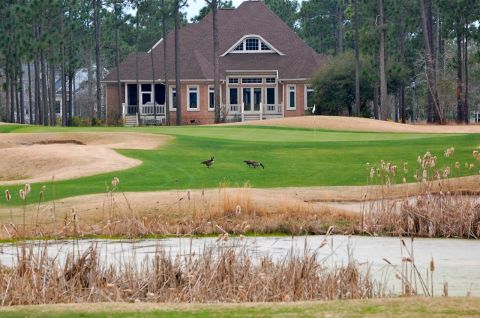
Single-family homes at Rivers Edge, which run from the $300s up, tend to be either brick or Hardi-plank. An architectural review board ensures that no vinyl or neon colors intrude on the overall refined look of the community.
Dues for an individual member are just $328 per month, but on the day I played, there were enough men’s and women’s groups out on the course to imply that a preponderance of memberships are of the family variety, which works out to $437 monthly. What makes the Rivers Edge membership even more attractive, especially for the golfer who plays often, is that cart fees are included. I don’t run into that very often. My playing partner last Friday, Jeff, told me he plays “every day.” Even if he exaggerated by a few days a year -– and I understand from his friends that he probably didn’t exaggerate by much –- Jeff saves more than $6,000 annually, based on cart fees elsewhere of about $20 per round.
River’s Edge provides another playing option that will appeal to those who purchase a vacation home in the community. For $1,280, residents can purchase a “punch card” good for 32 rounds of golf annually, cart included, or $40 per round. Owners of the punch card can use it as well to pay for guests’ rounds. With peak season green fees at Rivers Edge pegged at more than $100, the punch card is a good deal for seasonal homeowners.Though it is clearly a semi-private golf club, Rivers Edge exhibits a convivial, private club vibe in a Cheers Bar kind of way. Everyone I met on the course and in the clubhouse seemed to know everyone else. As I sat in the sprawling clubhouse that overlooks the river with my playing partners Jeff and Dennis, Jeff introduced me to every member who strolled by –- and there were a couple dozen of them since Friday is one of the three days each week that the River’s Edge men’s and women’s golf groups populate the course. When the package players arrive to fill out the tee sheets in March and April, things can get a little crowded, but with a little planning, members say their playing preferences are well served even at those busiest times.

The view from behind the 17th at Rivers Edge does not do justice to the intimidating shot faced by golfers who choose the lower of two fairways for their approach on the par 5.
The relatively low total cost to live at Rivers Edge -– property owner association dues are just $1,100 annually, and that helps pay for a gate that is manned during daylight hours -– is impressive given that just 100 homes of a planned 500 are built. Club membership provides access to a two-story Private Residence Club, which comprises an indoor and outdoor pool, a fitness center, library with wireless Internet connection, meeting spaces
The residents of Rivers Edge hail mostly from the northeast. Of my playing partners for the day, Jeff is the former swimming and diving coach at Syracuse University, and Dennis worked in the oil industry (he lived in 16 different towns during his career); Dennis still provides some consulting services to the industry, and occasionally he will make the trip to either the Wilmington or Myrtle Beach airport for a flight to Tulsa, Houston and other hotbeds. He told me connections from both airports were good.
The real estate options at Rivers Edge are diverse and run the gamut from multi-level buildings with townhomes, some lining the left side of the finishing hole and with direct views of the river and marsh, to million dollar homes with similar views (but well out of range of the taller buildings). Prices start in the $300s for town and patio homes, and just $50,000 for home sites; count on the customary $150 per square foot for construction costs, unless you want higher-end finishes, appliances and cabinetry. One representative townhome with 3 bedrooms, 3 ½ baths and views of the golf course is currently listed at $339,900. As with most real estate on the Carolinas coast, prices are off about 30% from their peak before the housing crisis.
I took a spin through the community with Real Estate Consultant Patrick Wright. If Patrick had not told me that only 20% of the 500 lots had been “improved” with homes, I would have guessed more than 50% of the community was built out. Landscaping is such that the open lots, though obviously awaiting homes, appeared to be purposefully landscaped open spaces. Homes that have been built are harmonious architecturally with one another, a mix of brick and Hardi-plank designs and giving a strong Low Country feel to the community’s enclaves.
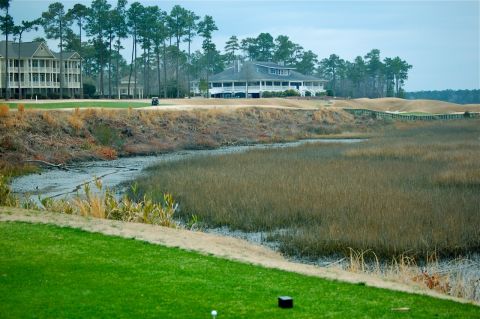
The townhomes and clubhouse (center, rear) help triangulate a difficult tee shot on the finishing hole at Rivers Edge. Both the condos and clubhouse command a beautiful view of the Shallotte River, to the right of the fairway.
By original agreement between the developer and owners, residents will inherit ownership of the community once 80% of all properties have been sold. That level has almost been reached, and the community will revert to the residents by 2015. [Editor’s Note: Between our visit 10 days ago and the drafting of this article, we learned that Bank of America had initiated action against Rivers Edge developer Mark Saunders and his organization for default on a $68 million loan related to a handful of his communities, including Rivers Edge. News coverage indicates Saunders is also $3 million in arrears for multi-year tax payments to Brunswick. Because the golf club at Rivers Edge is owned and run by an organization other than Saunders’, all amenities are in and paid for, and 80% of all available lots have been sold, we don’t believe this latest news has a material effect on the community’s inherent attractiveness, but it might tend to make pricing even more attractive. We urge all buyers to do their homework thoroughly before committing to a purchase in Rivers Edge or any other golf community. We are happy to help.]
Despite Rivers Edge’s fairly rural setting, all basic necessities of retirement life are within just 10 minutes, including supermarkets and other shopping needs, as well as a new hospital. Rivers Edge’s larger competitors, including St. James Plantation in Southport and Ocean Ridge Plantation in Sunset Beach, offer more options inside and outside their gates, but they are much larger in scope. You have a much greater chance of knowing everyone else’s name at the more intimate Rivers Edge, today and even when the golf community is fully built out.
If you are interested in more information about Rivers Edge, please contact me.
Coming Soon -- Fear and Loathing at Rivers Edge: The toughest par 5 on the Grand Strand.
 Home On The Course newsletter
Click here to sign up for our Free monthly newsletter, loaded with helpful information and observations about golf communities and their golf courses.
Geoffrey Cornish leaves legacy of refinement in golf course architecture
Geoffrey Cornish literally wrote the book on golf course architecture for us regular golfers. “The Architects of Golf,” written with Golf Digest’s Ron Whitten, details the histories of design of some of the world’s most notable golf courses, the ones we know courtesy of TV broadcasts, if not personally.
Mr. Cornish passed away recently at home in Amherst, MA, at the ripe old age of 97, pretty much at the geographical midpoint of the most prolific collection of his work. The vast majority of his more than 200 designs dot the mountains and seashores of New England; no golf designer has put a greater stamp on the golf architecture in New England than Cornish. He may not be well known outside the northeast, but his steady handiwork is unavoidable for golfers in the Land of Steady Habits; and any golf architect practicing today will have picked up at least one or two influential bits from the respected Mr. Cornish, who was a past president of the American Society of Golf Course Architects and earned many other golf design distinctions in his long career.
I was lucky to belong for 25 years to a club that featured one of the architect’s most interesting designs, Hop Meadow Country Club in Simsbury, CT, where Cornish worked with –- and around -– sharply severe elevation changes, a few indigenous ponds, tall native grasses, and lots of wooded areas. Hop Meadow is a long slog from the back tees (7,000 yards), but its fairways are generous and greens generally enormous and undulating, easy to find in regulation but a chore to two-putt. Hop Meadow plays to the strength of long hitters but insists they position their ball properly below the pins on the swirling greens to avoid the frustration of three putts.
Below are a few photos representing some of the Geoffrey Cornish golf courses I had the pleasure of playing.
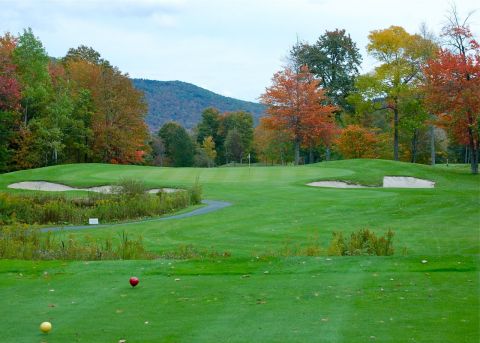
Par 3 3rd hole at Stratton Mountain's Mountain course in Vermont.
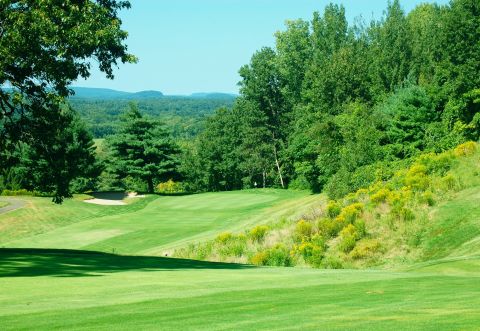
The approach to the par 4 5th hole at Tower Ridge in Simsbury, CT.
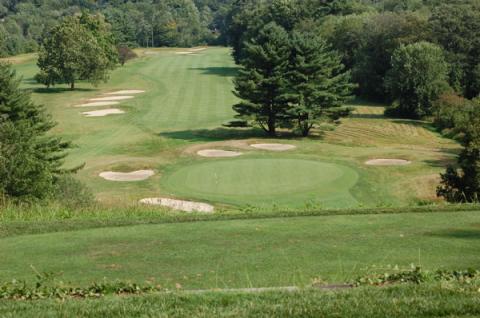
The par 3 downhill 16th and par 5 17th at Hop Meadow in Simsbury, CT.
Cliffs meeting clarifies new ownership
The Cliffs Communities board and its new owners met with Cliffs members Wednesday evening to explain the decision to award the financially strapped development to Steve and Penny Carlile, according to a member who attended the meeting. The Carliles intend to plow most of any money they make from The Cliffs back into the golf communities’ amenities and operations.
The board indicated that the Carliles, who have no experience in planned development management, were the only bidders of five who agreed to step aside if a better bid than theirs came along. The bidding process was opened after Cliffs founder Jim Anthony defaulted on a $64 million loan from his club members. If someone steps forward with terms the Cliffs board believes
On the issue of a continuing role for Cliffs founder Jim Anthony, the Carliles indicated they have had no business dealings with Anthony other than their purchase of lots at Walnut Cove and High Mountain, site of the unfinished Tiger Woods golf course, and they have not worked with him on their proposal to take over the communities. They reserved the right to call Anthony in as a consultant at their own personal cost, but that he will have neither a management nor ownership position under their ownership.
The Carliles’ primary home is in Marshall, TX, where the family fortune was made in oil and gas and where most of their family currently resides. They have made a big leap from owning a lot on a Carolina mountain to buying a huge development that spans 10 locations and thousands of acres. With a reported 20 bidders circling the bankrupt Reynolds Plantation in Georgia and the Carliles' apparently generous terms, it is easy to envision additional bids ahead for the Cliffs Communities.
Is Jim Anthony still pulling strings at Cliffs?
Some residents at The Cliffs Communities scratched their heads when the board in charge of identifying a buyer for the development selected a wealthy local couple, Steve and Penny Carlile, over experienced developers, including the [John] Reed Group out of Bluffton, SC (Colleton River, Belfair, Berkeley Hall, Hampton Hall) and the Stokes Land Group,
As the board’s decision to choose the Carliles sinks in, some residents are speculating that Cliffs founder Jim Anthony may be behind the surprising selection. The Carliles have made no secret that they plan to engage Anthony as a consultant, and the fact that the couple bought a lot in the flailing High Mountain development could signal a special kind of loyalty to the founder. The Carliles also contributed a reported $300,000 to the $64 million they and 500 other members provided to Anthony to upgrade and finish the amenities in the Cliffs communities. After one payment, Anthony defaulted on that loan and precipitated the current selling process. A bankruptcy court will ultimately decide if the Carliles have the best plan for The Cliffs. If some other group walks off with the prize, the Carliles will receive a $1 million payment, plus expenses, for their troubles, according to our sources.
As we wrote earlier, the Carliles’ agreement with the Cliffs board leaves the door open to other bids. Readers of this column may recall that a few months before he defaulted on the loan from his members, Anthony sued the Urbana Companies and a local South Carolina bank for having
Cliffs members meet tonight in Greenville to discuss with the board and the Carliles the sale of their community. I won’t be a fly on the wall, but if I were, and given the Carliles’ apparent fierce loyalty to Jim Anthony in the face of his failed management and default on their loan, I would ask the Carliles one question: “Will you adopt me?”
16 steps to secure a tee-time at The Villages
But I do know people who know people who know people who live in The Villages, and they apparently love the place. And while the vast community might be fairly described as a kind of Disneyland for the 55+ set, the golfing options are also the stuff of fantasy –- 39 golf courses in all, 10 18-hole “championship” layouts designed by Arnold Palmer and Nancy Lopez, among others, and the rest 9-hole executive golf courses.
Now you would think that with so many golfing options, booking a tee time would be a relatively simple affair, or even better, no tee time would be necessary; just walk up and play except, perhaps, at peak times during the winter. But consider there are 75,000 households of folks over the age of 55 inside the gates of The Villages, and you have the makings of chaos, as well as a complicated tee-time system.
“Complicated” does not begin to describe it. For those of you considering a mega-golf community with multiple courses designed by the likes of Arnold Palmer and Nancy Lopez, here’s what you have to look forward to if you choose The Villages. (The tee-time requesting process is taken directly from The Villages web site).
How to Request a Tee Time (at The Villages)
(This option will allow you to request a tee time from 4 to 7 days in advance.) To be assigned a tee time reservation by the system, you must first make a request as follows:
- Dial 753-GOLF (4653).
- Enter your golfer ID number.
- Enter your PIN number.
- Enter “1” for golf options. Enter “2” for tennis options.
- Enter “1” to make a tee time request.
- Enter “1” for “yes” if you are one of the golfers; enter “2” for “no” if you will not be golfing.
- Enter the number of the day you wish to play:
- Sunday
- Monday
- Tuesday
- Wednesday
- Thursday
- Friday
- Saturday
- Enter the total number of golfers in your group. NOTE: this number must be 2 digits (example: enter 03 for 3 golfers.) When requesting consecutive tee times you will need to enter the total number of golfers in your groups. (example: enter 13 for 13 golfers.) If this number is not divisible by four the system will take you to step 8A.
8A. Enter the number of golfers in group one. This number must be 2 digits. (Example: enter 03 for 3 golfers in each group.)
- Enter the 6-digit golfer ID number for each golfer in your group or enter “**” to indicate a guest.
9A. If you entered a guest, the system will ask you to enter the 6-digit golfer ID of the host.
- Enter the time of day you wish to play. NOTE: this entry requires 4 digits. Enter 2 digits for the hour followed by 2 digits for the minutes. For example if the time you wish to play is 8:00 then you will enter 0800.
- Enter the earliest time of day you wish to play. Enter 2 digits for the hour followed by 2 digits for the minutes.
- Enter the latest time of day you wish to play. Enter 2 digits for the hour followed by 2 digits for the minutes. (To increase your chances of receiving a reservation we suggest a minimum of a 5-hour window between your earliest and latest times.)
- Enter “1” to select a championship course. Enter “2” to select an executive course.
- Enter “1” to select all courses
Enter “2” to select any course north of County Road 466.
Enter “3” to select any course south of County Road 466.
Enter “4” to select an individual course (unlimited valid course selection) If option “4” was selected go to step 14A
14A. Enter the course number you wish to play; enter “1” to select another course or enter “2” to continue.
- Enter “1” for a time over course preference; enter “2” for a course over time preference. (If time is more important to you choose option “1.” If the course is more important to you choose option “2.”)
- Enter “1” to verify request or enter “2” to continue. When selecting option 1 the system will verify your request. If option “2” was selected the system will not verify your request and will take you to the next step.
Enter “1” to accept your request or enter “2” to discard.
If “1” was selected please write down your request number.
Couple purchases Cliffs Communities, but door appears open to additional bids
The path to a financial comeback for the mega Cliffs Communities turned out not to be in Jacksonville, FL or Bluffton, SC, as anticipated, but rather inside the gates of The Cliffs itself. Steven and Penny Carlile, two residents of The Cliffs, offered terms that the golf communities’ board of directors and management have accepted “unanimously,” according to a letter sent earlier today to members of ClubCo, the group that previously loaned Cliffs founder Jim Anthony $64 million to finish and enhance the developments’ legendary roster of amenities. When Anthony defaulted on the loan, ClubCo wound up with the amenities but could not pay for the expensive continuing upkeep of the amenities and was itself heading toward bankruptcy.
Before the board accepted the Carliles’ bid, experienced developers Stokes Land Development (Jacksonville-based), the Reed Group (Bluffton) and a reported two other organizations had vied for The Cliffs, its seven
According to today’s letter, the board considered the Carliles’ “financial stability” a key factor in the choice. One line, however, in the Board’s note to members caught our eye: “…the ClubCo Board and Indenture Trustee have reached a mutual agreement with the Carlile Group that provides a period during the first phase of reorganization that allows for additional offers to be submitted.”
We have never made a multi-million bid for anything, but it strikes us as odd that any group seriously interested in buying The Cliffs would essentially invite some other group to make a better offer and snatch the prize from them later. Perhaps the Cliffs’ board and the Carliles, whose business life appears centered on religious principles and neighborliness, are setting the stage for experienced developers to make additional bids on more advantageous terms for their friends and neighbors. As the letter adds, “Our goal is to achieve the best possible plan in the interest of all Members and creditors.” They may have found the way. We think The Cliffs may still be in play.Time runs out for White Oak developers
It was perhaps inevitable that a golf community opened just a couple of years before the housing bubble burst and with nothing to attract potential buyers except nine holes of an 18 hole golf course would wind up on the auction block. It took the Ireland-based developers of White Oak of Tryon, NC, four years to sell just 29 lots but it took the local bankruptcy court mere minutes to dispose of the 980-acre property for a bargain-basement $3.6 million on the Polk County courthouse steps.
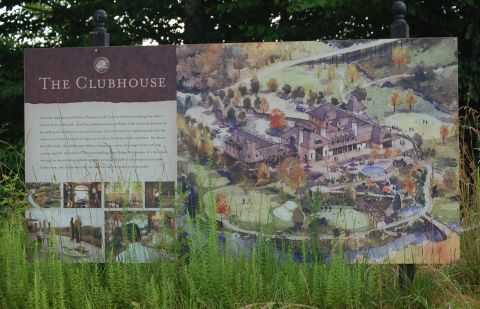
The once elaborate plans for a golf clubhouse won't be implemented by the original developers of White Oak. It remains to be seen if the golf community's 18 hole course will ever be finished.
The auction was ordered by the court after White Oak’s developers, who were based in Ireland and New York, failed to pay for an irrigation line the county had run to the property, as well as back taxes. Only a half dozen homes had been built on the rolling terrain about 45 minutes from Greenville, NC. The new owner, Roger Smith, commands an organization called Tryon Equestrian Properties. White Oak was always planned to include equestrian-oriented amenities, and Smith likely will move ahead with those plans, assuming he comes up with the financing. Smith purchased nearly 100 acres in the Tryon area in 2008 to build an equestrian center, and officials representing White Oak’s developers had indicated to Golf Community Reviews last year that they hoped to partner with the equestrian center.
Now, with nearly $40 million invested in the community and a total dry-up of lot sales, time has run out on the developers. Smith now owns the entire property, and whether he finishes the excellently laid out Arnold Palmer designed golf course (Erik Larsen did most of the work) and eventually builds a clubhouse remains to be seen. That will depend on real estate sales.
It always does.
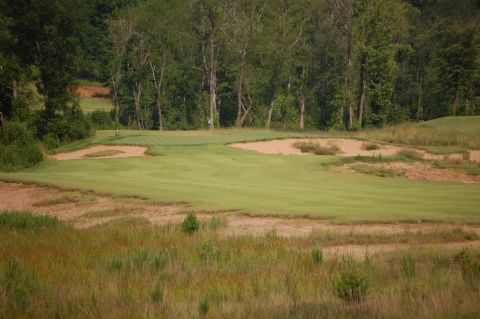
White Oak has the potential to be a top 10 golf course in the state of North Carolina, but it will take some love and care -- and about $2 million -- to finish the full 18 hole layout.
Trump This: The Donald has a big week
But in the last few days, Trump is back with a vengeance. Today, he flew to Las Vegas to re-insert himself into the show known as the Republican campaign for President. He endorsed Mitt Romney who, like Trump, likes to fire people; perhaps the coiffed one is angling for Secretary of Labor in a Romney administration. Romney, those who care about such things may recall, was the only candidate to visit Trump at his marbled New York aerie and then leave by the servants’ entrance, ostensibly in order to avoid having to answer questions about ring kissing. There won’t be any back doors available today.
But fascinated though we are with politics and public displays of vanity, our humble blog is about golf communities, and we are pleased to report a
The most loyal members of The Point could find themselves eternally rewarded. Last week, The Donald announced that he wants to build a private cemetery next to his Trump National Golf Club in New Jersey. According to the web site NJ.com, “The 1.5-acre site would become the exclusive final resting place for wealthy club members who pay as much as $300,000 in membership fees.” Perhaps adjacent cemeteries will become a Trump golf club signature.
But Point Club members can rest easy on one score: Donald Trump has already announced that he and his family will be buried at the cemetery adjacent to the New Jersey club. "This is really about members,” a Trump consultant said, “but we do plan to set something aside for Mr. Trump and his family."
Where golf balls -- and bogeys -- go to die
Golfers don’t typically check the tide tables before heading out to the golf course, but those with plans to play the Jack Nicklaus designed Pawleys Plantation Golf Club might consider it. The short par 3 13th at Pawleys Plantation, its green almost totally surrounded by marsh and with no bailout area, is scary enough without the added attraction of hundreds of golf balls sitting in the marshy muck between the tee and the bulkhead that props up the green. A confident swing is a fundamental requirement on the 13th tee, and the open grave beneath the tee box inspires much more dread than confidence. Better to play the hole at high tide, when the results of poorly played shots are out of sight.
The hole plays short –- just 145 yards from the tips, 115 yards from the blue tees and a paltry 69 yards from the white tees –- but the green at the 13th is smaller than the famed 17th at TPC Sawgrass. At a mere 1/2 mile from the ocean, with nothing but marsh separating the two, the green is open to a prevailing breeze that typically blows from left to right. On breezy days, a proper shot must start at the left edge of the green and ride the zephyrs back toward the meaty part of the putting surface (“meaty” looking more like a lamb riblet from the tee box than a hunk of ribeye). If the wind reaches, say, 15 mph, not unusual so close to the Atlantic, a proper tee shot must start out over the marsh.

The muck and mired balls in the marsh short of the 13th hole at Pawleys Plantation do not exactly inspire confidence on the tee box.
Members and those who have played Pawleys Plantation over time learn to ignore the pin position, denoted by the standard flag colors of red (front), white (middle) and blue (back); the tee shot is all or nothing at all. Since the green tilts from back to front, well-struck wedges or 9 irons will stick where they land. And because the green is so small, the reward for staying on it results in a putt of reasonable to short length for a birdie. But if your shot joins those balls in the muck short of the green or beyond it, the drop area 10 yards to the right of the putting surface makes the third shot enormously difficult. Not only must the length of roll of the chip shot be judged perfectly, but it also must traverse the tilt of the green from right to left. If the pin is yellow, the best you can hope for is a 15-foot putt for bogey from beneath the hole.
If you want to have fun with your playing partner on the 13th, bet him on the tee that he can’t make a bogey four. If he stays on the green, concede his par putt, if not the birdie. But chances are you won't have to; bogey four is the toughest score on the “short par 5” at Pawleys Plantation.
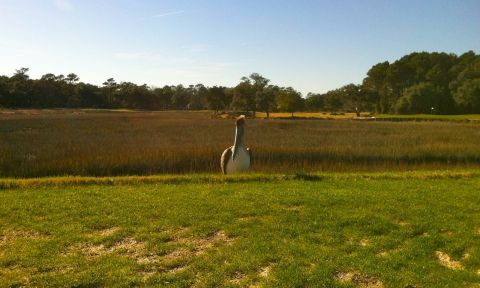
The back nine's two par 3s at Pawleys Plantation, #13 and #17, play off the dike that once controlled water flow on the former rice plantation. A native pelican prefers the 17th (background right) to the 13th.
Myrtle Beach golf condos on sale
The wide range of golf courses and sharply priced golf packages in the Myrtle Beach area are a strong magnet for golfers, especially the boys-will-be-boys groups that plan their years around an annual week’s golf vacation, buffet dining and light carousing beyond the watchful eyes of wives and girlfriends. East of the Mississippi River, there is no golf market that checks those boxes better than does Myrtle Beach. Its 100+ golf courses and dozens of all-you-can-eat seafood palaces keep competition high and prices low. Where Pinehurst may offer a safer bet in terms of golf quality, if not quantity, you can choose well if you choose wisely in Myrtle Beach; and unlike Pinehurst, you will have something to do at night besides listening to crickets or retiring early.

True Grit: True Blue Plantation uses many of its waste bunkers as cart paths. Photo by Elliot deBear
I am in the Myrtle Beach area for a few weeks and last weekend played the unique True Blue Plantation golf course in Pawleys Island, a favorite of many visiting golfers, especially those who don’t mind acres of sand. The late Mike Strantz was as generous with his fairways as he was with his sand; at many points, carts are directed through the waste bunkers and up wooden runways onto those wide fairways. (It was cart path only last Sunday after a night of rain, and it was quite a workout getting to and from shots not near the bunkers.) Along with its sister course across the street, the famed Caledonia Golf & Fish Club (also a Strantz design), this is the most impressive tandem of semi-private clubs on the Grand Strand. Add in Pawleys Plantation (Nicklaus), Heritage Plantation (Larry Young/Dan Maples) and Founders Club (Thomas Walker), all within a few minutes of each other, and a golfing group could be quite satisfied for a week of play in the area. (The local restaurants, led by Franks and Frank’s Outback, are varied and excellent as well, and you will find no better lunch, with no better views of the expansive marsh -– and of the 18th green -- than from the porch at Caledonia).
Going through the real estate section of the Myrtle Beach Sun Times today, I came across an ad for a condo overlooking the True Blue golf course that seemed so low in price that golfing groups who return to Myrtle Beach year in and year out might want to consider using it as the base for their annual visits. The 3BR, 2 BA unit features cathedral ceilings and views of a lake, as well as the golf course. At just $123,000 –- which means you could probably get it for less than $120,000 –- eight friends could kick in $15,000 each and never have to worry about making arrangements or paying for lodging again. With presentation of a utility bill for the unit and payment of just $40 each, Myrtle Beach Golf Passport will issue an annual pass to two golfers; the pass holder can then host three others at Caledonia, True Blue and 80 other courses at significant discounts, and as many times during the year as you want.
If we are truly at the bottom of the housing market, a unit like the one at True Blue could also provide a little upside appreciation, which would be a nice little bonus. And the eight buddies could easily figure out a schedule for their families to use the condo a few weeks a year, an informal timeshare arrangement, to take advantage of the great beach on Pawleys Island –- just five minutes away –- and the numerous children’s activities in the Myrtle Beach area. Mom will like the shopping as well, if not the golf.
If you want more information on the True Blue unit or any other condos or single-family homes in the Myrtle Beach area, please contact me. I know the area well -– I own a condo myself in Pawleys Island -- and would be happy to make suggestions based on your particular requirements, whether you are looking for a vacation place or a permanent retirement home.

True Blue condo for sale, listed at $123,000.
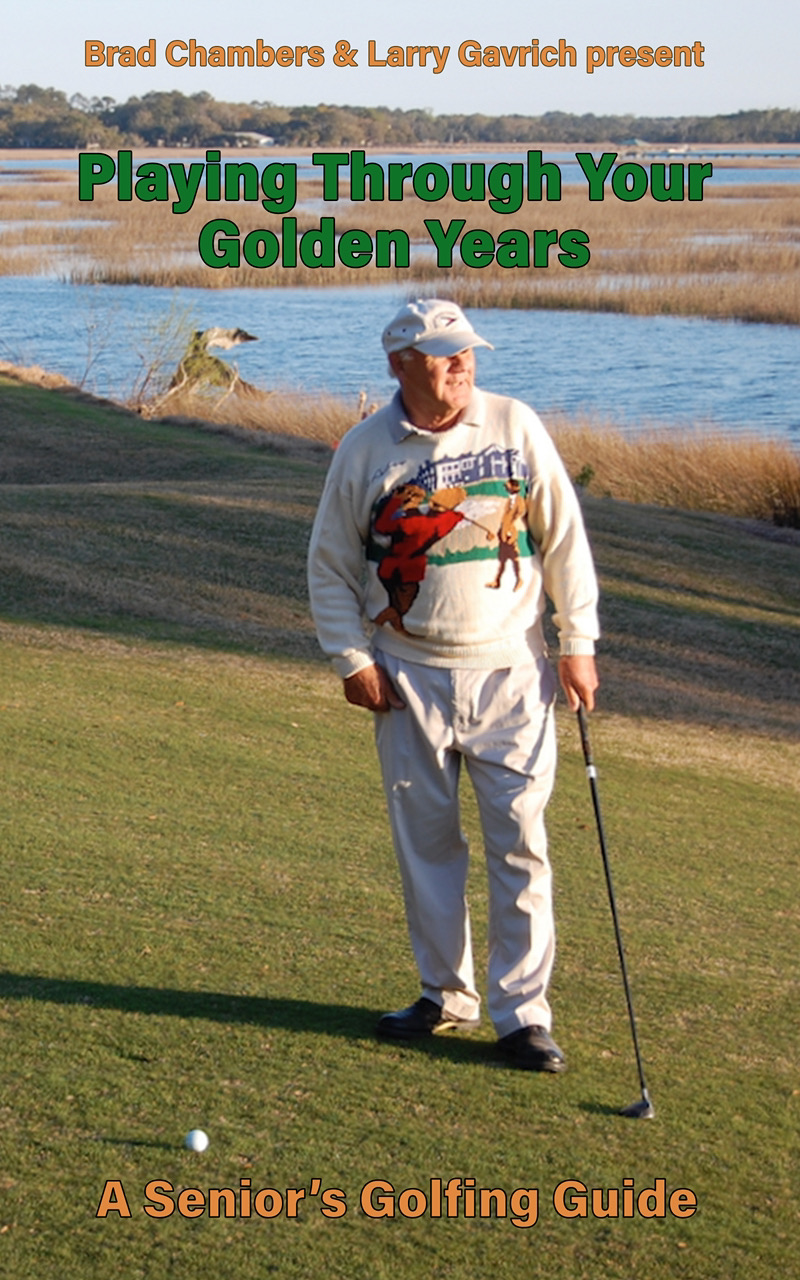
Now on Sale

- The only book about golf communities in the last 10 years.
- 156-page step-by-step guide to finding your dream golf home.
- Info on nearly 100 golf communities the author has visited.
- Paperback version costs less than a sleeve of Pro VIs.
Here is what the experts are saying:
“The book is chocked full of information…applicable to anyone looking for a move to the Southeast regardless of whether they are looking for a golf community or not.” — John LaFoy, golf architect (Linville Ridge CC, CC of Charleston, The Neuse GC)
“Larry has done a tremendous amount of work and anyone — like me — who is looking to search for a golf home now or in a few years needs this book.” — Brad Chambers, golf blogger, ShootingYourAge.com
“Wow! What a thorough piece of work…a must for anyone moving South. This book will help many people.” — Brett Miller, owner and founder of MMA, Inc, a golf industry consultancy
Buy It Now at Amazon.com or BarnesandNoble.com.