Georgia on my mind; should be on yours too
The state of Georgia doesn’t get its due when it comes to golf. When was the last time your golfing buddies talked about a long weekend or week of golf in Georgia? No, Myrtle Beach, Pinehurst, Scottsdale are top of the list largely because they offer quantity as well as quality golf. But if you like to order a la carte from a big menu, Georgia can more than hold its own.
This came to mind as I entered Georgia via I-95 yesterday and picked up a copy of the state's guide to golf at the Welcome Center. This was my first visit back to the state since summer last year. It was good to be back. Last spring, I played the Dye course at Ford Plantation (see Tuesday post for how much I liked it). Last summer, my son and I played the fantastic Cuscowilla in the north central part of the state, the Crenshaw/Moore design that typically ranks either first or second in GolfWeek’s annual residential course rankings (the competition is the renowned Wade Hampton in the mountains of North Carolina).
The state that gave us Bobby Jones, Augusta National and the Masters provides an almost limitless variety of public-access golf as well. At the coast, the best community courses include Sapelo Hammock (see our post yesterday) in Shellman Bluff; The Hampton Club and Sea Palms, both on St. Simons Island; and Osprey Cove, which we are visiting today. We’ve played the dramatic Mike Young design at Cateechee near Lake Hartwell in the north part of the state, and would return in a minute. Reynold’s Plantation and its own buffet of courses (five) is on our list for the summer. We note as well that the upstate region is one of the fastest growing in terms of golf course development, and we look forward to exploring that area soon. In short, you can put together and play your own Georgia golf "trail" without burning up too much gas.
You’ll find a comprehensive list of public access courses at http://www.georgia.org/Travel/Rejuvenate/Golf. Many of them are located inside residential communities.
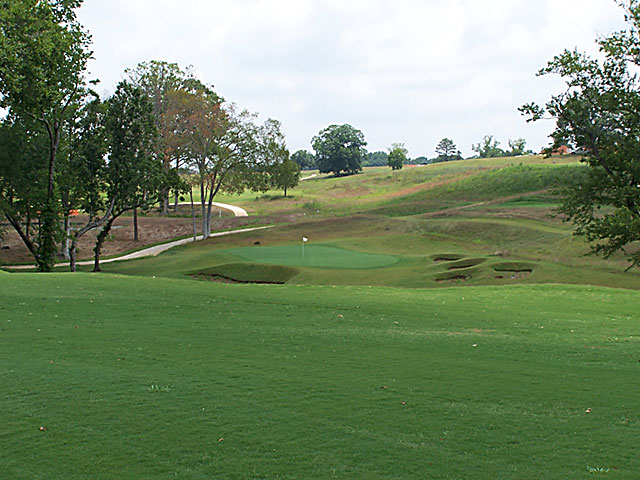
Mike Young's Cateechee course near Lake Hartwell is one of many hidden gems in north Georgia.
 Home On The Course newsletter
Click here to sign up for our Free monthly newsletter, loaded with helpful information and observations about golf communities and their golf courses.
Restaurant review: Lang's Seafood, St. Mary's, GA
Other items on the menu are fish house typical, and although all dishes are offered grilled or blackened, as well as fried, most scream out for breading. This is the low country, after all. A blackboard at the front counter included a list of fresh fish of the day, those not on the menu. There was even an 8 ounce lobster tail for just $22 -- that's a half pound of lobster meat, almost -- which you could pair with a ribeye steak for just over $30. I was disappointed our waitress said nothing about the alternative choices and, indeed, the service was the low point of the meal. But she was cheery and returned to the table often to check on my status -- and, once, to attempt to take my half eaten plate of cole slaw. No way I was going to give up the slaw, which was crisp and much enhanced by a modest amount of mayonnaise. The hush puppies, by the way, the often leaden deep-fried dollops of corn meal, were as good as they get.
The restaurant itself was clean, with nice views out to the inlet and the adjacent boat docks. We were impressed that it wasn't overly nautical in its decor. The food is definitely the focus at Lang's. The waterfront park next door is a good place to walk after dinner; a few local coffee shops offer dessert options (we passed on dessert at Lang's, not wanting to tempt fate).
The Lang family appears to own the waterfront in St. Mary's. Not only does the name adorn the restaurant, but also the local marina and a seafood retail store. The restaurant has no excuses for less than the freshest seafood possible, and it does not disappoint.
Address: 307 W. St. Marys St., near the waterfront park, St. Marys, GA. Phone: 912-882-4432

Georgia Peach: Coastal course, community appeal to pioneers
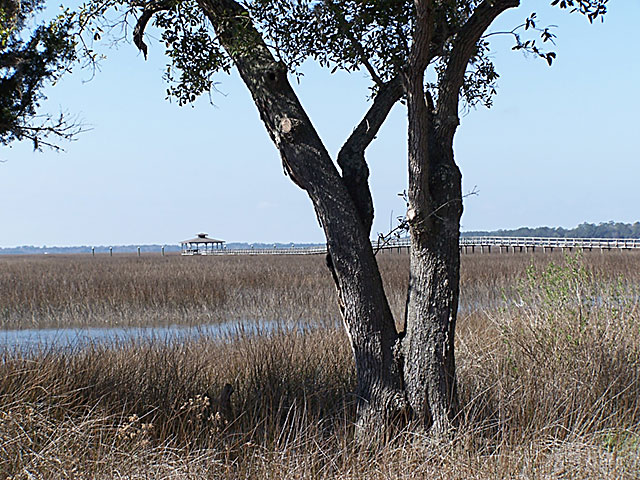
Golf Course Review: Cooper's Point
When a course layout engenders praise and complaint in about equal measure, count on it to provide an interesting four hours. During our round at Sapelo Hammock, in the central coastal region of Georgia, one of our playing partners labeled one par 3 as “the worst designed in America,” a few holes before claiming another hole as “The worst designed par 5 in America.” Yet Golfweek magazine has called the course’s par 3s and par 5s “spectacular.” Offered another of our playing partners: “[It is] a great course to walk, and fun to play every day.”
Sapelo Hammock is Rusty Simmons’ solo design effort. We could not find another course he has designed on his own, although he was project manager at the respected public golf complex Crosswinds, near the Savannah International Airport, and was an apprentice earlier in his career in the firm of Davis Love III.
If Sapelo Hammock was to be his only effort, it was a good one indeed. Given 200 acres of rolling terrain flanked by marsh, live oaks and loblolly pine, Simmons didn’t screw it up and, indeed, crafted a layout that is easy on the legs, if you decide to walk, as well as easy on the eyes. Houses are kept well back from the course, and out of bounds markers are few. We played on a windy day, and many of Sapelo Hammock’s holes seemed to play downwind. The fairways, which had not been over-seeded during the winter, were firm and provided extra roll. However, that advantage was neutralized by greens that we found daunting to read; a few of our rolls broke the opposite of how they read. The speed of the putts, though, was consistent throughout the round. The slope from the men’s tees, at just over 6,300 yards, is a fair 129. Women’s tees are either 4,900 or 5,400 yards.
Sapelo Hammock is a bargain for members and the public alike. There is no initiation fee, with annual dues just $1,800. Daily green fees for walk-ins are $47 on the weekend, $37.50 weekdays. At nearly an hour from Savannah, Sapelo Hammock’s tee sheet is not often crowded with names. The owners are clearly hoping that the adjacent Cooper’s Point development will come alive and provide the members the club needs to thrive.
Cooper’s Point has a nice inventory of marsh and river view properties at prices half of what you will pay farther up or down the coast. Houses at Cooper’s Point cost $100 per square foot to build -- $125 if you really want to get fancy -– also about half of what it costs to build similar houses in Savannah, just an hour away. Less than a mile down the road is Shellman Bluff, a tiny, quaint fishing village that time forgot. Get to know the shrimp boat captain, and he will take your order by phone from his boat and deliver it to you at the dock.
For those with a little patient capital and an intrepid spirit, an investment in Cooper’s Point will provide the instant gratification of a beautiful marsh-view home at a bargain price, about 10 miles from I-95. And the golf, despite the un-heralded designer, is more than enjoyable. Contact Cooper’s Point Land Specialist Sharon Brooks at 1-877-266-7376 (SGBrooks04@hotmail.com). The web address is www.cooperspoint.com.
Ford Built: High-end community, fine Dye course where Sherman marched
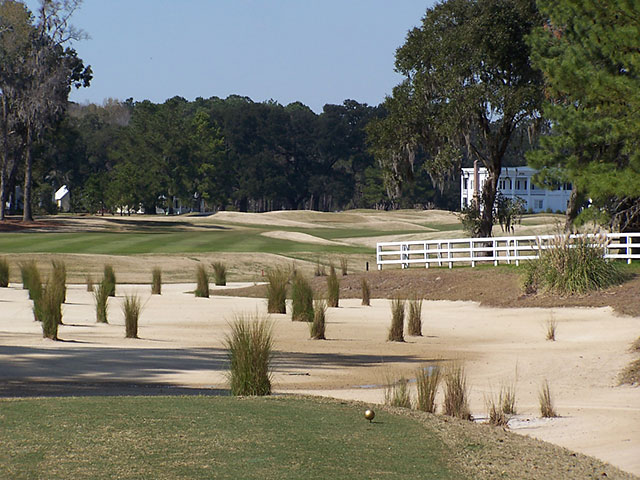
Golf Community Review: Ford Plantation
At the end of his infamous Civil War march, William Tecumseh Sherman’s troops laid waste to the Silk Hope, Cherry Hill and Richmond Plantations, which later became The Ford Plantation. On a general’s salary, Sherman might not be able to afford to live there today, but he wouldn’t fit in anyway (too intense).
The laid-back Ford Plantation in Richmond Hill, GA, about 15 miles south of Savannah, is exclusive without being excluding, but if you have to ask how much it costs to live there, well then you probably can’t afford it. For the record, custom homes begin around $1.9 million, but the average is about $1.3 million. (Update: Current golf homes for sale in Ford Plantation start around $700,000. See a selection of them at GolfHomesListed.) In the McAllister Landing area, Charleston meets Savannah, with 24 Charleston Battery-style homes planned around a well-treed square that evokes the layout of Savannah. Square footage of the homes ranges from 2,100 to 4,000 in six designs; expect home prices starting at about $800,000. The rest of the plantation is characterized by equally distinctive neighborhoods. A few lots remain from the original 400 sites.
Initiation fees and carrying costs are high compared with most other golf communities. At $115,000, the golf club’s equity membership, which is required when you purchase a lot, is the priciest we have seen in more than 70 communities visited, but 80 percent of the investment is returned when you sell your property. Membership in the Ford Plantation club conveys much more than golf, however. The Plantation’s 6,000-square foot Sports Barn provides a basketball court, squash, badminton and fitness classes (we were afraid to ask about something called “primordial sound meditation”). Other services, such as a spa, equestrian center, sporting clays, fishing excursions and use of the marina, are avilable for an extra charge. Club dues and property owner fees together are high at $13,000 annually, but it is hard to put a price on the combination of deluxe amenities, high-class service, near perfect golf, a secluded location and proximity to city services, such as shopping, hospitals and restaurants less than 15 minutes away. And there are unique touches as well. Henry Ford purchased Richmond Plantation in the 1930s as a getaway for him and the missus; he built the plantation’s centerpiece, The Main House, a Greek Revival mansion that served as his and Clara Ford’s living quarters during their stays. The couple’s separate portraits still hang in the mansion’s living room. If you are considering property at Ford Plantation, call to arrange to sleep where the car tycoon himself slept, or in Clara Ford’s bedroom. We didn’t stay overnight, but we would have gladly paid the reasonable $200 to do so.
Ford Plantation’s topography is flat, characterized by marsh and river views and achingly beautiful live oaks. The community has built 10 miles of walking trails (for horses, as well as humans) around Lake Clara, named for Mrs. Ford, and along the Ogeechee River. Ford Plantation has a strong water orientation, although its marketing materials highlight the equestrian aspects as well.
Terrific Dye Job
The Ogeechee Golf Club, named for the adjacent river, blends with the landscape beautifully. Like the community, the course is refined and elegant and never calls too much attention to itself. That certainly doesn’t sound like Pete Dye, but we admire him for the restraints he imposed here and the way he let the golf course flow with the river. We drove a cart, but the course would be a joy to walk; even the #10 tee is near the #9 green, not always the case at modern, cart-oriented courses. Caddies are available for members who request them. Cart paths on the course were utterly unobtrusive, so much so that a few times we drove to the wrong side of the fairway looking for the path.
The front nine is studded with live oaks, and the back is a more open, Scottish links design, echoing somewhat Dye’s work at the Ocean Course at Kiawah Island. Most holes played with a crosswind, but when the wind ran with the fairway it was with you on the long holes and against you on the short ones. The greens were near flawless in March and medium fast, and although the grass on the fairways was still a little thin, we didn’t have a bad lie all day. Bunkers in the fairways and at greenside were definitely in play, and if you went left or right of a green and were fortunate not to land in marsh or water, you typically were faced with a loft over a bunker to the pin. The course was beautifully manicured; workers were in evidence throughout the afternoon round.
Links magazine recently anointed Ford Plantation one of its top 100 "premier" properties. And next August, the course will host the Georgia State Senior Amateur tournament. It will be interesting to see the scores.
Ford Plantation combines everything you would want in a golf course community -- a challenging golf course you could enjoy playing every day; a feeling of seclusion but in a location within 15 minutes of healthcare and retail options; a range of house styles without a clunker design among them; and well-chosen and executed amenities and services that appeal to both permanent and part-time residents. The price of admission is substantial, but for those with trust funds, hedge funds or enough mutual funds, it is worth a look.
For information, contact Lisa Andrews at 1-877-735-8367, or LAndrews@fordplantation.com. Web site: http://www.fordplantation.com
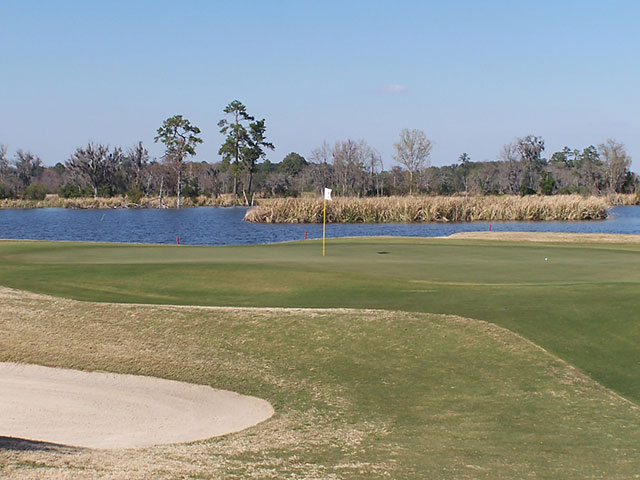
[where: 31324]
Real estate brokers get creative with 0% commission. Really!
We first learned about the new approach from C.B. Johnson, our real estate contact in Wilmington, NC. Johnson, who leads the Fine Coastal Living Team under the Keller-Williams banner, recently introduced his "No Strings" listing program . Its most attention-getting feature is a 0% commission if you sell your home before he does. How can he do it?
"I know I will sell it faster than the owners will," says Johnson, "because I won't take an overpriced listing." If the owner lists with Johnson, sells the home before he does but wants the Jonhson team to write and process the contract, the fee is just 1%. If the owner lists a home with Fine Coastal Living and the team procures the buyer, then the commission is 4%, a couple of points below the customary commission rate. If some agency other than Fine Coastal finds the buyer, the commission is 6% total.
Almost as impressive is that the homeowner may cancel the listing at any time. All it takes is a phone call and two days to yank the listing from the Multiple List Service.
The idea is not unique, although not yet widespread. Bruce Hardie, an agent in Spokane, WA, offers an identical service called the "Hassle Free Listing."
Whether hassle free or no strings attached, look for this kind of creativity to spread. Lucky us.
Georgia, Texas youngest of popular retirement states
Age by states
%65+ <18 18 to 65
Arizona 12.8 26.6 60.6
Florida 17.6 22.9 59.5
No. Carolina 12.1 24.7 63.2
So. Carolina 12.6 24.1 63.3
Georgia 9.6 26.0 64.4
Virginia 11.4 24.1 64.5
Tennessee 12.6 23.3 64.1
Alabama 13.2 23.9 62.9
Texas 9.9 27.7 62.4
Nevada 11.3 25.7 63.0
Quote of the Day: No thanks
-- 73 year old John Reppert, a golf-playing resident of Rossmoor, a Walnut Creek, CA, "active retirement" community. Developers spent $2 million on golf course improvements only to find some of its members quit because the course was too difficult. (Source: The San Francisco Chronicle)
Term limit: Private should mean members-only, nothing else
Porters Neck, which has been available for public play for a few decades, recently raised its greens fees by about 60% to over $100 and its initiation fees for new members to $30,000. Last year, the members commissioned more than $1 million of work on the Tom Fazio golf course and added two tennis courts. The club is also in its second go-round with Creative Golf Marketing, a firm that specializes in raising the membership rolls at private clubs (Porters Neck has even enrolled in CGM's 180-course "Private Club Network," which provides access to all the courses for members of clubs in the network). Put all that together and the club is signalling its intention to be members-only. Yet when asked if they plan to go private, Porters Neck officials say, “We’ve always been private.” What they mean, they explain, is that they have always been “privately owned.” Come on: Private means members-only, not the opposite of municipally owned.
The emailed article from Golf Vacation Insider describes how non-members can gain access to the “private” Gallery Club in Tucson where Tiger et al are competing in the Accenture Match Play Championship this weekend on the club’s South course (as we write this, Tiger has just lost to Nick O'Hern). The North and South courses, according to GVC, alternate days when they are open to public play; in other words, on a day when the South is private, the North is public, and vice versa. That’s great for us golfers traveling in the Tucson area but, by definition, the club is not private.
Like the word “unique” – how unique is very unique? -- privacy should never be qualified. That’s why we would outlaw the meaningless but ubiquitous term “semi-private” in favor of the more accurate “public access.”
Of course, as always, we invite alternate views. Just register or sign in and leave your comment here...on our semi-private blog site.
Golf Review: Wintergreen offers haven for golfers, skiers and nature lovers
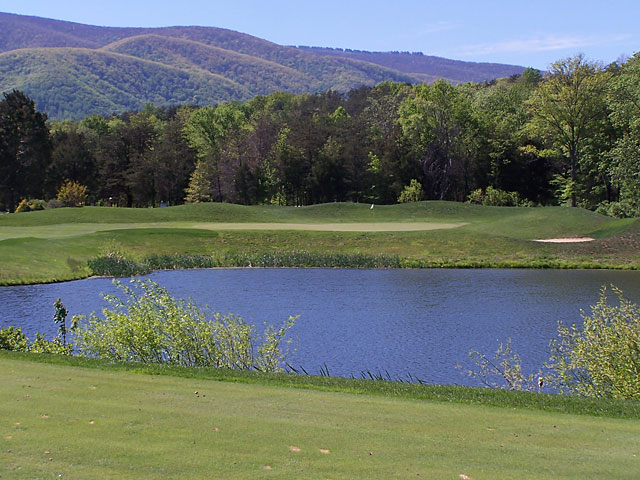
At the Wintergreen Resort, you can ski and play golf, sometimes on the same day. Located in Nellysford, VA, about 35 minutes from Charlottesville, Wintergreen is one of those hybrid resort/residential communities where the transient and permanent exist in peaceful harmony.
At 11,000 acres, Wintergreen is huge, with mountain real estate accounting for about 2,000 acres and the Stoney Creek community in the valley below sitting on 3,000 acres. The rest will remain natural forever thanks to an arrangement in 1994 between Wintergreen’s owners and the Wintergreen Development Company. The result, the Wintergreen Nature Foundation, maintains a full-time staff of six, supplemented by many volunteers from Wintergreen. The Foundation promotes a wide range of activities, including wildflower reseeding efforts, workshops and nature walks on the community’s 30 miles of marked trails, some of which link directly to The Appalachian Trail. Mountain bikers have use of 24 separate trails, mostly near the ski slopes.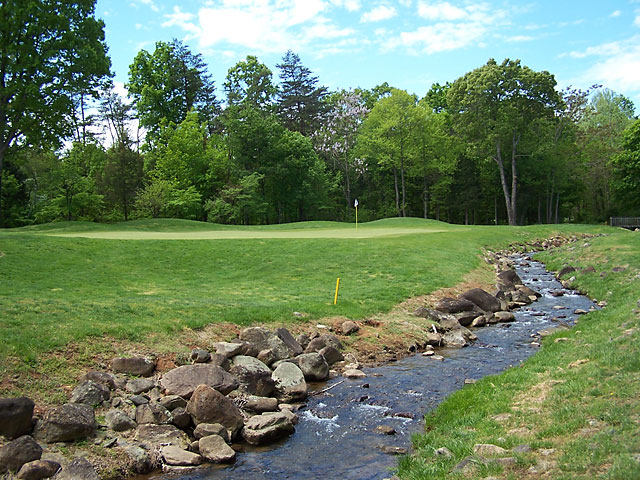
At Wintergreen, the core recreation activities are skiing and golf. Wintergreen’s mountain top area is warm and inviting, with a Euro-village style lodge just steps from the resort’s 24 slopes, more than half of them lighted, and from the clubhouse and pro shop for Devil’s Knob, an Ellis Maples 18 hole layout that inspires awe, some fear and a little loathing. Opened in 1977, the course provides the views you’d expect from a mountaintop, but some crazy rolls and cliff hanging lies as well. Many local golfers prefer the two original nines of the 27 holes at the Stoney Creek course at the bottom of the mountain, which is open year round. It is not uncommon in January and February for Wintergreen’s hardiest sportsmen and women to ski in the morning and play golf in the afternoon.
The Shamokin and Tuckahoe nines at Stoney Creek are the combination most favored by members. Rees Jones laid out the Shamokin and Monaccan nines in 1988 and added the Tuckhoe 10 years later. The routing is clear and without surprise, with only one or two blind shots from the tees and no gussied-up landscaping. The greens, which are well trapped, roll fast and true with many undulations, yet we didn’t scratch our heads once over a misread break. The first hole on the Tuckahoe nine starts from a dramatically elevated tee to a generous fairway framed by traps on the right and a huge lake at greenside right. It forms a beautiful and intimidating tableau from the tee box. A decade ago, Golf Digest named Stoney Creek one of the top 50 resort courses in the U.S.
With a grand smorgasbord of activities at Wintergreen, the community offers a dizzying array of membership plans. A fee of $17,000, 80% of it refundable when a membership is resigned and reissued, opens up the resort’s amenities on a “cafeteria-style” basis that includes not only golf, but also tennis, skiing, fitness centers, pools and access to the community lake. For example, you can buy unlimited golf for $4,000 annually, or unlimited golf, tennis and snow sports for $4,350, a bargain.
Housing options are high and low in Wintergreen in terms of both altitude and price, with nice golf course lots in the ½ to ¾ acre range for under $200,000. Count on an average of about $175 per square foot in construction costs. A few of the most expensive homes, some with impressive views, top $1 million but the median price is close to $600,000. Town homes rarely exceed $500,000, but a new top-of-mountain luxury building, called The Summit, will provide large condos and spectacular views for around $1 million.
Life at some remove from a sizeable town (Wintergreen is 40 minutes from Charlottesville) demands a few modest accommodations. At 15 miles, it can seem a long way to a supermarket, and some Wintergreen residents take coolers on their weekly grocery expeditions. And although Wintergreen’s residents and resort guests co-exist quite peacefully, the full-timers tend to arrange their recreation schedules accordingly, opting to play golf and ski on weekdays rather than the more heavily trafficked weekends. Given the incredible amount and variation of the natural land in Wintergreen, its residents are more than happy on weekends to take a hike.
Bottom Line: Wintergreen’s residents share the community’s ample number of amenities and 6,000 acres of unsullied natural space with more than 100,000 resort guests a year, yet there is plenty of room for all. If you don’t require the cosseted life of a private country club community, Wintergreen’s range of year-round activities, fine variety of golf courses, reasonable real estate prices and beautiful views could put you on permanent vacation.
Betting the ranch? Waiting for market turnaround could be costly
PMI, the Private Mortgage Insurance Company, knows something about risk, and every year the company publishes a “risk index” which sizes up the potential for decline in major housing markets. The latest index was released in late January. Not surprisingly, the riskiest markets are on the west coast, with Sacramento leading the way with a 60.4% risk of declining home values. The riskiest non-California market is the Nassau-Suffolk Counties area of Long Island, with a 60% risk factor. Contrast that with the Charlotte, NC, area with a 9% decline potential, or San Antonio with a 7.5% risk. That’s quite a spread for those considering moving south in a few years, and maybe it argues for taking your lumps now rather than later.
Financial advisors are always preaching about conservative portfolios of investments as you approach or enter retirement. The mantra is to reduce your risk, and being of a certain age ourselves, we can’t argue with that. But it seems the same advice might apply to housing, no?
Consider this. Your home on Long Island (or wherever) is not appreciating and isn’t likely to for the next few years, according to many sources. That gated golf community you’ve had your eye on in the Charleston area is appreciating at close to 10% annually and seems likely to continue to do so as more and more baby boomers head south. How much risk do you want to take that next year your primary home may appreciate enough to keep up with the appreciation of the house you want to buy in a few years down south? And if you are still waiting five years from now, will you have to settle for, say, a wooded view rather than a lake view?
For the adventuresome, housing futures, which trade pretty much like stock market futures, may be an intermediate strategy, especially if you live in one of the 10 markets you can bet on (or against). For more information, a simple Google search by the term "housing futures" will provide some information.
In the spirit of full disclosure, we own shelter in Connecticut and, with one child three years from college, we have a convenient excuse not to take our own advice. Out of impetuous dumb luck, we bought a condo near the coast in South Carolina seven years ago. So we have some yang to go with the yin of a soft market in the Hartford area. But three years from now, as empty nesters, the view from here will be very different.
Amelia Island and north of Jacksonville

Now on Sale

- The only book about golf communities in the last 10 years.
- 156-page step-by-step guide to finding your dream golf home.
- Info on nearly 100 golf communities the author has visited.
- Paperback version costs less than a sleeve of Pro VIs.
Here is what the experts are saying:
“The book is chocked full of information…applicable to anyone looking for a move to the Southeast regardless of whether they are looking for a golf community or not.” — John LaFoy, golf architect (Linville Ridge CC, CC of Charleston, The Neuse GC)
“Larry has done a tremendous amount of work and anyone — like me — who is looking to search for a golf home now or in a few years needs this book.” — Brad Chambers, golf blogger, ShootingYourAge.com
“Wow! What a thorough piece of work…a must for anyone moving South. This book will help many people.” — Brett Miller, owner and founder of MMA, Inc, a golf industry consultancy
Buy It Now at Amazon.com or BarnesandNoble.com.